From kidusmarkos.org and ethiopiantewahedo.com:
Daily Readings:
Saints/Feasts/Fasts to be observed/commemmorated/celebrated: + St. Deqsius
Week Two, Day Four
The Eleventh day
Morning Prayer
In the name of the Father……….
Opening Prayer
O God our heavenly Father, who hear the prayer and cry of your children, and grant them what they want and ask you, we humbly ask you to hear our morning prayers to begin this day with you and end it with you. Amen. Our Father…
Psalm 56: 1-13
56:1 Be merciful to me, O God: for man would swallow me up; he fighting daily oppresses me. 56:2 Mine enemies would daily swallow me up: for they be many that fight against me, O thou most High. 56:3 What time I am afraid, I will trust in thee. 56:4 In God I will praise his word, in God I have put my trust; I will not fear what flesh can do to me. 56:5 Every day they wrest my words: all their thoughts are against me for evil. 56:6 They gather themselves together, they hide themselves, they mark my steps, when they wait for my soul. 56:7 Shall they escape by iniquity? in your anger cast down the people, O God. 56:8 Thou tellest my wanderings: put thou my tears into your bottle: are they not in your book? 56:9 When I cry to thee, then shall mine enemies turn back: this I know; for God is for me. 56:10 In God will I praise his word: in the Lord will I praise his word. 56:11 In God have I put my trust: I will not be afraid what man can do to me. 56:12 Your vows are upon me, O God: I will render praises to thee. 56:13 For you have delivered my soul from death: wilt not thou deliver my feet from falling, that I may walk before God in the light of the living? Glory be to the Father and to the Son and to the Holy Spirit, As it was in the beginning…
Psalm 57: 1-11
57:1 Be merciful to me, O God, be merciful to me: for my soul trusts in thee: yea, in the shadow of your wings will I make my refuge, until these calamities be overpast. 57:2 I will cry to God most high; to God that performs all things for me. 57:3 He shall send from heaven, and save me from the reproach of him that would swallow me up. Selah. God shall send forth his mercy and his truth. 57:4 My soul is among lions: and I lie even among them that are set on fire, even the sons of men, whose teeth are spears and arrows, and their tongue a sharp sword. 57:5 Be thou exalted, O God, above the heavens; let your glory be above all the earth. 57:6 They have prepared a net for my steps; my soul is bowed down: they have digged a pit before me, into the midst whereof they are fallen themselves. Selah. 57:7 My heart is fixed, O God, my heart is fixed: I will sing and give praise. 57:8 Awake up, my glory; awake, psaltery and harp: I myself will awake early. 57:9 I will praise thee, O Lord, among the people: I will sing to thee among the nations. 57:10 For your mercy is great to the heavens, and your truth to the clouds. 57:11 Be thou exalted, O God, above the heavens: let your glory be above all the earth. Glory be to the Father and to the Son and to the Holy Spirit, As it was in the beginning…
Psalm 58: 1-11
58:1 Do ye indeed speak righteousness, O congregation? do ye judge uprightly, O ye sons of men? 58:2 Yea, in heart ye work wickedness; ye weigh the violence of your hands in the earth. 58:3 The wicked are estranged from the womb: they go astray as soon as they be born, speaking lies. 58:4 Their poison is like the poison of a serpent: they are like the deaf adder that stops her ear; 58:5 Which will not hearken to the voice of charmers, charming never so wisely. 58:6 Break their teeth, O God, in their mouth: break out the great teeth of the young lions, O Lord. 58:7 Let them melt away as waters which run continually: when he bends his bow to shoot his arrows, let them be as cut in pieces. 58:8 As a snail which melts, let every one of them pass away: like the untimely birth of a woman, that they may not see the sun. 58:9 Before your pots can feel the thorns, he shall take them away as with a whirlwind, both living, and in his wrath. 58:10 The righteous shall rejoice when he seesthe vengeance: he shall wash his feet in the blood of the wicked. 58:11 So that a man shall say, Verily there is a reward for the righteous: verily he is a God that judges in the earth. Glory be to the Father and to the Son and to the Holy Spirit, As it was in the beginning…
Scripture Readings
1st Reading
Isaiah 43: 1-3
43:1 But now thus saith the Lord that created thee, O Jacob, and he that formed thee, O Israel, Fear not: for I have redeemed thee, I have called thee by your name; you are mine. When thou passest through the waters, I will be with thee; and through the rivers, they shall not overflow thee: when thou walkest through the fire, thou shall not be burned; neither shall the flame kindle upon thee. For I am the Lord your God, the Holy One of Israel, your Saviour: I gave Egypt for your ransom, Ethiopia and Seba for thee. He who receives the Prophet by the name of the Prophet shall receive the Prophet’s reward. Amen
2nd Reading
2nd Corinthians 1: 3-5
1:3 Blessed be God, even the Father of our Lord Jesus Christ, the Father of mercies, and the God of all comfort; Who comforts us in all our tribulation, that we may be able to comfort them which are in any trouble, by the comfort wherewith we ourselves are comforted of God. For as the sufferings of Christ abound in us, so our consolation also abounds by Christ. He who receives the Apostle by the name of the Apostle shall receive the Apostle’ s reward. Amen
3rd Reading (Chant)
Psalm 4: 1-2
4:1 Hear me when I call, O God of my righteousness: you have enlarged me when I was in distress; have mercy upon me, and hear my prayer. 4:2 O ye sons of men, how long will ye turn my glory into shame? How long will ye love vanity, and seek after leasing? Selah. Halleluiah! Stand and harken to the Holy Gospel, the message of our Lord and Saviour Jesus Christ.
4th Reading
The Gospel of St. Luke 18: 1-8
18:1 And he spoke a parable to them to this end, that men ought always to pray, and not to faint; Saying, There was in a city a judge, which feared not God, neither regarded man: And there was a widow in that city; and she came to him, saying, Avenge me of mine adversary. And he would not for a while: but afterward he said within himself, Though I fear not God, nor regard man; Yet because this widow troubles me, I will avenge her, lest by her continual coming she weary me. And the Lord said, Hear what the unjust judge saith. And shall not God avenge his own elect, which cry day and night to him, though he bear long with them? I tell you that he will avenge them speedily. Nevertheless when the Son of man cometh, shall he find faith on the earth? He who receives the Saint by the name of the Saint shall receive the Saint’s reward. Amen
Concluding Prayer
Lord our God, God of mercy and love, help us to keep on working, with fear and trembling, to complete our salvation, for you are always at work in us to make us willing and able to obey your own purpose. Grant us your grace to do everything without complaining or arguing, that we may be innocent and pure, as your perfect children. Amen. Our Father…O my Lady Mary…..
--------------------------------------------------------------------------------
Day 11
Evening Prayer
In the name of the Father and……..
Opening Prayer
Lord God, our heavenly Father, we pray to you and ask you in our evening prayer to help us to remember that our fathers were put to the test to prove their love of God. And to remember how our father Abraham was tested and become the friend of God after many trials and tribulations of every kind. Grant us your grace to stand firm in love and faith of you and remain steadfast in the face of tribulations of every kind and test. Amen. Our Father…,O my Lady Mary,….
Psalm 59: 1-17
59:1 Deliver me from mine enemies, O my God: defend me from them that rise up against me. 59:2 Deliver me from the workers of iniquity, and save me from bloody men. 59:3 For, lo, they lie in wait for my soul: the mighty are gathered against me; not for my transgression, nor for my sin, O Lord. 59:4 They run and prepare themselves without my fault: awake to help me, and behold. 59:5 Thou therefore, O Lord God of hosts, the God of Israel, awake to visit all the heathen: be not merciful to any wicked transgressors. Selah. 59:6 They return at evening: they make a noise like a dog, and go round about the city. 59:7 Behold, they belch out with their mouth: swords are in their lips: for who, say they, doth hear? 59:8 But thou, O Lord, shall laugh at them; thou shall have all the heathen in derision. 59:9 Because of his strength will I wait upon thee: for God is my defence. 59:10 The God of my mercy shall prevent me: God shall let me see my desire upon mine enemies. 59:11 Slay them not, lest my people forget: scatter them by your power; and bring them down, O Lord our shield. 59:12 For the sin of their mouth and the words of their lips let them even be taken in their pride: and for cursing and lying which they speak. 59:13 Consume them in wrath, consume them, that they may not be: and let them know that God rules in Jacob to the ends of the earth. Selah. 59:14 And at evening let them return; and let them make a noise like a dog, and go round about the city. 59:15 Let them wander up and down for meat, and grudge if they be not satisfied. 59:16 But I will sing of your power; yea, I will sing aloud of your mercy in the morning: for you have been my defence and refuge in the day of my trouble. 59:17 To thee, O my strength, will I sing: for God is my defence, and the God of my mercy. Glory be to the Father and to the Son and to the Holy Spirit, As it was in the beginning…
Psalm 60: 1-12
60:1 O God, you have cast us off, you have scattered us, you have been displeased; O turn thyself to us again. 60:2 You have made the earth to tremble; you have broken it: heal the breaches thereof; for it shakes. 60:3 You have showed your people hard things: you have made us to drink the wine of astonishment. 60:4 You have given a banner to them that fear thee, that it may be displayed because of the truth. Selah. 60:5 That your beloved may be delivered; save with your right hand, and hear me. 60:6 God hath spoken in his holiness; I will rejoice, I will divide Shechem, and mete out the valley of Succoth. 60:7 Gilead is mine, and Manasseh is mine; Ephraim also is the strength of mine head; Judah is my lawgiver; 60:8 Moab is my washpot; over Edom will I cast out my shoe: Philistia, triumph because of me. 60:9 Who will bring me into the strong city? who will lead me into Edom? 60:10 Wilt not thou, O God, which hadst cast us off? and thou, O God, which didst not go out with our armies? 60:11 Give us help from trouble: for vain is the help of man. 60:12 Through God we shall do valiantly: for he it is that shall tread down our enemies. Glory be to the Father and to the Son and to the Holy Spirit, As it was in the beginning…
Psalm 61: 1-8
61:1 Hear my cry, O God; attend to my prayer. 61:2 From the end of the earth will I cry to thee, when my heart is overwhelmed: lead me to the rock that is higher than I. 61:3 For you have been a shelter for me, and a strong tower from the enemy. 61:4 I will abide in your tabernacle forever: I will trust in the covert of your wings. Selah. 61:5 For thou, O God, have heard my vows: you have given me the heritage of those that fear your name. 61:6 Youwilt prolong the king's life: and his years as many generations. 61:7 He shall abide before God forever: O prepare mercy and truth, which may preserve him. 61:8 So will I sing praise to your name forever, that I may daily perform my vows. Glory be to the Father and to the Son and to the Holy Spirit, As it was in the beginning…
Scripture Reading
1st Reading
Isaiah 40: 6-8
40:6 The voice said, Cry. And he said, What shall I cry? All flesh is grass, and all the goodliness thereof is as the flower of the field: The grass withers, the flower fades: because the spirit of the Lord blows upon it: surely the people are grass. The grass withers, the flower fades: but the word of our God shall stand forever. He who receives the prophet the by the name of the prophet, shall receive the prophet’s …
2nd Reading
Romans 1: 16-17
1:16 For I am not ashamed of the gospel of Christ: for it is the power of God to salvation to every one that believeth; to the Jew first, and also to the Greek. For therein is the righteousness of God revealed from faith to faith: as it is written, The just shall live by faith. He who receives the Apostle by the name of the Apostle shall receive the Apostle’ s reward. Amen
3rd Reading (Chant)
Psalm 61: 1-2
61:1 Hear my cry, O God; attend to my prayer. 61:2 From the end of the earth will I cry to thee, when my heart is overwhelmed: lead me to the rock that is higher than I. Halleluiah, stand up and harken to the Holy Gospel, the message of our Lord and Saviour Jesus Christ.
4th Reading
The Gospel of St. Luke 17: 5-6
17:5 And the apostles said to the Lord, Increase our faith. 17:6 And the Lord said, If ye had faith as a grain of mustard seed, ye might say to this sycamine tree, be plucked up by the root, and be planted in the sea; and it should obey you. He who receives the Saint by the name of the Saint shall receive the Saint’s reward. Amen
<!--[endif]-->
Concluding Prayer
Almighty God and Master, you open the gates of the kingdom of heaven to those who are born again of water and the Holy Spirit. Increase the grace you have given through the Holy sacraments, so that all Christian people who have purified from all sin may not forfeit the promised blessing of your love. We ask this trough our Lord Jesus Christ, to him be glory now and forever. Amen. Our Father….
The Synaxarium:
THE THIRD MONTH
HEDAR 22
(December 01)
IN THE NAME OF THE FATHER AND THE SON AND THE HOLY SPIRIT,
ONE GOD. AMEN.
On this day became martyrs Cosmas, and Damianus, and the brethren ‘Antimos (Arithimus), and Londius (Leontius), and Abranius, and their mother Theodata. These saints were natives of the city of Deyoma, in the country of Arabia, and came from the temple, which was built in the Name of the Son of God. Their mother was a woman who feared God, and she was compassionate and gave large gifts to the pilgrims. After the death of their father this widow brought them up and taught them the fear of God. Now Cosmas and Damianus having learned practical philosophy (i.e. medicine) used to heal all those who were sick without fees and without gifts, and especially those who were poor; and their three brothers departed to the desert and became monks. Now Diocletian denied Christ because of [the son of] the King of Kuez (Khuzistan), whom he had committed for safe keeping to a bishop whose name was Gagyos. Abba Gagyos took an oath to the Emperor Diocletian that the son of the King of Kuez (Khuzistan?) had died in his house, and that he had buried him with his own hands, [whereas the bishop had connived at the prince’s escape]. For this reason Diocletian worshipped foul and brutish idols, and commanded all the people who were in his kingdom to worship idols. And certain men accused Cosmas and Damianus of preaching in the Name of Christ in every city, and of ordering the people not to worship idols. And Diocletian sent letters commanding his soldiers to bring them to him, and they did so, and they handed them over to Lasius the governor of the city, who tortured them severely with fire, and beat them cruelly with whips. Then he asked them questions about their three brothers, and when he knew the place where they were, he sent men and they brought them and their mother also with them. Then he commanded the soldiers to torture the five of them on the wheel, and they did as he commanded. And after this they cast them into a red-hot fiery furnace, and they remained therein for three days and three nights and were unharmed. And they also cast them into the blazing furnace of the baths, and burned them upon [a red-hot] iron bed, but in spite of all these tortures they were not able to overcome them, and God raised them up whole and unharmed. When the governor was weary of torturing them, he handed them over to the emperor who also tortured them cruelly. And their mother encouraged them to endure, and she comforted them and she cursed the emperor to his face and his filthy idols. And straightway the emperor commanded the soldiers to cut off her head with the sword, and they cut off her head, and she received the crown of martyrdom in the kingdom of the heavens. And her body was cast out on the earth and no man dared to bury it. Then Cosmas cried out, saying, “O men of this city, is there not among you one man who hath in him sufficient mercy to hide the body of this poor old widow and bury it?” And straightway Victor, the son of Romanus, came, and he was bold enough to take her body and prepare it for the grave and bury it. When the emperor heard that Victor had buried her body he was wroth and he commanded his soldiers to drive him into exile in the land of Egypt where he received the crown of martyrdom. And as concerning Cosmas and Damianus and their brethren the emperor commanded his soldiers to cut off their heads with the sword, [and they did so], and they received crowns of martyrdom and life everlasting in the kingdom of the heavens. After the days of persecution were ended a church was built for them, and God made manifest many signs and wonders [through their bodies]. Salutation to the children of Theodata, who are to be praised.
And on this day also became martyrs two hundred and ninety-two men, and nine and forty women who were companions of Saint Cosmas. Salutation to these martyrs.
Glory be to God Who is glorified in His Saints. Amen.

Wednesday, December 1, 2010


Anglican/Episcopalian Daily Readings For Wednesday, 1 December
From satucket.com and wapedia:
Daily Readings:
Saints/Heroes/Feasts/Fasts to be observed/commemmorated/celebrated: First Week of Advent,
NICHOLAS FERRAR
DEACON, MAN OF PRAYER (1 DEC 1637)
Nicholas Ferrar, born in 1592, was the founder of a religious community that lasted from 1626 to 1646.
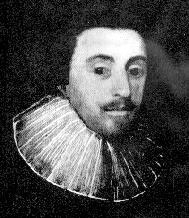 After Nicholas had been ordained as a deacon, he and his family and a few friends retired to Little Gidding, Huntingdonshire, England, to devote themselves to a life of prayer, fasting, and almsgiving (Matthew 6:2,5,16). They restored the abandoned church building, and became responsible for regular services there. They taught the neighborhood children, and looked after the health and well-being of the people of the district. They read the regular daily offices of the Book of Common Prayer, including the recital every day of the complete Psalter. (Day and night, there was always at least one member of the community kneeling in prayer before the altar, that they might keep the word, "Pray without ceasing.") They wrote books and stories dealing with various aspects of Christian faith and practice. They fasted with great rigor, and in other ways embraced voluntary poverty, so that they might have as much money as possible for the relief of the poor.
The community was founded in 1626 (when Nicholas was 34). He died in 1637 (aged 45), and in 1646 the community was forcibly broken up by the Puritans of Cromwell's army. The memory of the community survived to inspire and influence later undertakings in Christian communal living, and one of T.S. Eliot's Four Quartets is called "Little Gidding."
by James Kiefer
[Clicking on the link above will take you to Amazon.com, where you may buy the book if you wish.]
***** ***** ***** ***** *****
From Simon Kershaw:
James supplies various details about Nicholas Ferrar's life. This is a supplement (mostly from memory, so there may be one or two lapses).
Ferrar was born in February 1593. The date is commonly given (as James did) as 1592, but this is the usual calendar confusion: England was not then using the new calendar adopted in October 1582. It was 1593 according to our modern calendar, but at the time the new year in England began on the following 25 March.
His exact date of birth is unknown, but the Community at Little Gidding observed the quatercentenary of his baptism on 27th February this year (unfortunately we couldn't get there). I quote from Seeds (the magazine of the Friends of Little Gidding and of the Society of Christ the Sower):
On 27th February, the anniversary of Nicholas's baptism, we met in our candlelit church for a communion service using the original 1549 rite---a form of worship familiar to the Ferrars. Margaret selected a variety of readings about the life of Nicholas and the first Community; and for hymns we used some of George Herbert's poetry set to 17th century music.
[Actually the statement about the 1549 rite being familiar to the Ferrars is either a misprint or a mistake: the 1559 Prayer Book of Elizabeth I would have been the BCP they knew, and the eucharist in particular is a little different between the two books.]
His family was quite wealthy, and were heavily involved in the Virginia Company, which had a Royal Charter for the plantation of the colony of Virginia. People like Sir Walter Raleigh were often visitors to the family home in London. Ferrar's niece was named Virginia, the first known use of this name. Ferrar studied at Cambridge and would perhaps have gone on to further study and the life of a don, but the damp air of the fens was bad for his health and he travelled to Europe, spending time in the warmer climate of Italy, where he would have seen the work of Philip Neri and other Oratorians.
On his return to England he found his family had fared badly. His brother John had become over-extended financially, and the Virginia Company was in danger of losing its charter. Nicholas threw himself into preserving his family from ruin. In this he was successful, and he served for a short time as a Member of Parliament, where he tried to promote the cause of the Virginia Company (which in fact did lose its charter).
At the age of 34 he gave all this up to move to found a community of prayer. In this he was supported by his mother, Mary Ferrar, and his brother John. They discovered and bought the manor of Little Gidding, a village which had been deserted since the Black Death (a major outburst of bubonic plague in the 14th century), a few miles off the Great North Road, and probably recommended by John Williams, Bishop of Lincoln whose palace was at the nearby village of Buckden. The first thing they did was to clear the tiny church which was being used as a barn and restore it for worship. Mary Ferrar and her extended family and household (about 30 people all told) moved into the manor house. Nicholas Ferrar was ordained Deacon and was the leader and spiritual director of the community.
The community attracted much attention and was visited by the king, Charles I. He was attracted by a gospel harmony they had produced, and asked to borrow it, only returning it several months later in exchange for a promise of a new harmony to give to his son, Charles, Prince of Wales. This the Ferrars did, and the superbly produced and bound manuscript book passed through the royal collection, and is now held by the British Library. Another friend of the community was George Herbert (also born in 1593 I believe) who was a deacon and held the prebend of Leighton Bromswold, 4 or 5 miles south of Little Gidding. After being ordained priest he moved elsewhere, but died shortly afterwards, leaving Nicholas Ferrar as his "literary executor".
Ferrar, who never married, died on 4th December 1637**, and was buried outside the church in Little Gidding. The leadership of the community passed to his brother John. They were visited by the king twice more. Once he came with the Prince of Wales and donated to the community some money he had won at cards off the prince the previous night. But his third visit was in secret and at night. He was fleeing from defeat (at the battle of Naseby?) and heading north to try to enlist support from the Scots. This was Cromwell country (Cromwell himself was born in Huntingdon, had lived there and in Saint Ives, and was MP for Cambridge(?), but John brought him secretly to Little Gidding, and got him away the next day.
** I don't know why he is commemorated on the wrong day in both the ECUSA and the CofE [JEK: I assume that it is because John of Damascus is commemorated on 4 December.]
The community was now in much danger. The presbyterian Puritans were now in the ascendancy, and the community was condemned in a series of scurillous pamphlets as `an Arminian Nunnery'. (Arminius was a Dutch reformer/theologian who opposed the Calvinist doctrine of predestination and election.)
In 1646, the community was forcibly broken up by Parliamentary soldiers. The brass font was thrown into the pond (from where, much damaged, it was recovered 200 years later). The village remained the property of the Ferrar family, however, and in the early 18th century another Nicholas Ferrar restored the church, shortening the nave by about 8 feet, and building the "dull facade" as Eliot calls it.
Passing out of the family, the church was further restored in the mid 19th century by William Hodgkinson, who had the armorial stained glass (4 windows with the arms of Ferrar (incorrect), Charles I, Bishop Williams & himself) inserted, and put in a rose window at the east end (this rose window was removed a couple of years ago and replaced by a Palladian-style window with plain glass). It was Hodgkinson who discovered the font and had it restored to the church. He also put in a magnificent 18th century chandelier.
In the 20th century there was a revival of interest in Ferrar & Little Gidding, typified by the romantic historical novel John Inglesant. Bp Mandell Creighton (Bishop of London at the turn of the century) wrote an article on Ferrar for the Dictionary of National Biography. The story of how T.S. Eliot came to write the poem is told in Dame Helen Gardner's book The Composition of Four Quartets [now out or print]. He probably visited Little Gidding only once, in May 1936. A friend was writing a play about the visit of Charles I to Gidding, and asked Eliot for his comments. After writing The Dry Salvages, Eliot wanted to complete what he now saw as a set of 4 poems, and he quickly settled on Little Gidding. It was written and published during the war when it was by no means certain that English culture and religion would survive. The opening stanzas, according to Dame Helen, are the only piece of narrative verse in the Four Quartets, unique amongst Eliot's poetry. The "place you would be likely to come from" is London and the blitz, or German air raids; the "route you would be likely to take" is straight up the A1 from London and then across country just as I described yesterday, and is the same whether you are Charles I ("a broken king") or not knowing what you would find (as my own first visit). The pig-sty is now part of the community guest house.
Inspired by all these things, the Friends of Little Gidding was founded after the war, with the Bishop of Ely as president and Eliot as a vice-president. In the 1970s Robert Van de Weyer, one of whose ancestors had been Herbert's patron at Leighton Bromswold, founded a trust to buy the farm house as the start of a new community and as a place of retreat. Van de Weyer was an economics lecturer at Cambridge University, and was for a time also the (non-stipendiary) priest-in-charge of Little Gidding and several parishes around. His wife, Sarah, is a leading member of the diocesan Mothers' Union and its links with the church in Sudan. The community appears to be thriving, with (at a guess) some 30 members, families, couples and singles, of several denominations (RC, Anglican, and others) with some members working outside, others within the Community. They also own the vicarage at Leighton Bromswold where some of the younger members of the community live. There is also a guest house at Little Gidding. There's also about 300 Friends, including Karen and me. By coincidence we used to live about a dozen miles from East Coker, a pretty Somerset village, featured in another of the Quartets, where Eliot's ancestors lived before emigrating to Massachusetts, and where Eliot is buried. One day perhaps we'll get to those Dry Salvages out at Cape Ann, Mass ... perhaps one of you has been there?
We find the atractions of community life never so great as when we visit Little Gidding, a truly holy place.
POSTSCRIPT (April 1994):
The community is now called the Society of Christ the Sower.
The Friends of Little Gidding has several hundred members, including Karen and me. Friends receive a regular newsletter from the Society, a prayer cycle of members and friends, and regular books put together by the society. Recently the book has become a book of devotional readings which may be used at the Daily Office. The first such (still current) is a series of readings culled from the writings of St Francis, and from various near-contemporary hagiographies.
Further details available on request. Hope this helps.
-- simon.kershaw@smallworld.co.uk
Several people have privately asked for more information about the Community of Christ the Sower and the Friends of Little Gidding. The following paragraphs are from the back of the Society's latest publication, a series of daily readings on the life of St Francis of Assisi.
THE SOCIETY OF CHRIST THE SOWER
The Society of Christ the Sower is an ecumenical religious order for married and single people. Its members follow a simple Rule of life, committing them to daily prayer, shared ministry, careful stewardship of resources, and evangelism.
The Society was founded at Little Gidding, which remains its centre. This is the site of a Christian community formed in 1626 by Nicholas Ferrar, and his beautiful chapel continues to be used for prayer each day by Society members. Before his death he said to his community: `It is the right, good old way you are in; keep in it.' These words express the aspirations of the present Society.
Church groups are invited to Little Gidding to reflect on their own common life, with the help of Society members. And each day between 11am and 5pm the `Parlour' is open to visitors. There is a small exhibition, refreshments are served and gifts made by members can be bought. Guest accommodation is available for individuals, families and small groups.
Approximately fifteen members plus their children live at Little Gidding itself. Other members live elsewhere, including Leighton Bromswold, four miles south of Little Gidding, where George Herbert, poet and friend of Nicholas Ferrar, was incumbent.
THE FRIENDS OF LITTLE GIDDING
Founded in 1947 by Alan Maycock, the Friends of Little Gidding organised for over thirty years an annual pilgrimage and raised funds for the maintenance of the church at Little Gidding. One of the original members was T.S. Eliot, whose poem entitled Little Gidding helped to renew interest in the place and its history.
Alan Maycock looked forward to community life being restored to Little Gidding. And when this occurred in the late 1970s the Friends decided to attach themselves to the Society of Christ the Sower.
Today the Friends of Little Gidding is primarily a network of prayer, and to this end a prayer calendar is sent every three months to all Friends. They also receive every six months a book in the series Daily Listening published by the Society. Many Friends also take an active interest in the life of the Society, visiting Little Gidding and corresponding with members.
The Friends of Little Gidding, Little Gidding, Huntingdon, PE17 5RJ
telephone +832 293383
***** ***** ***** ***** *****
Subject: A December pilgrimage
You drive out of Cambridge, north-west up the busy A604 dual carriageway, passing by Saint Ives. Over the A1 (the "Great North Road") onto the brand-new A14. After a few miles turn off north and drive a few hundred yards to Leighton Bromswold, where George Herbert was the incumbent. Then on, further north, down narrow country lanes, hardly wide enough for 2 cars to pass. Now you're out of the flat East Anglian fens and into the Huntingdonshire Wolds, where the land rises gently and is lightly wooded. A few more turnings, through Steeple Gidding, and on towards Great Gidding. Finally, a little signpost points down a single-lane track: "Little Gidding". Down this muddy road for a few hundred yards and you reach a small group of simple brick houses clustered around a large old farm house. A sign proclaims "The Community of Christ the Sower" in a circle around four ears of wheat arranged as a cross, and points to a small car park off to the left---it's just another muddy field. Out of the car the cold, damp misty December air hits you: you sniff, button up your coat and wish you'd worn wellingtons.
A footpath leads from the car park alongside the garden of the big house, and brings you to a small churchyard, tidily kept, with several tombs. A small church, with a weird 18th century facade, stands in the middle of the churchyard, a small door in the middle of the west front. Before the door stands an altar-tomb, a couple of feet high: this is the grave of Nicholas Ferrar. Inside the church it's dark, and still bitterly cold and damp. It's just a single aisle, say 30 feet long by 15 feet wide, with a small sanctuary beyond. There're no pews or seats, just 17th-century collegiate-style stalls around the west, north and south walls. Brightly-coloured 19th-century stained glass windows depict the coats of arms of Nicholas Ferrar (incorrectly), King Charles I, and the 19th-century restorer. A brass font with a battered crown stands like a standard candlestick at the north side of the sanctuary step. On the south side, a low doorway leads to the tiny vestry, about 8 feet square, with a disused fireplace, and an old cupboard, piled with dusty hymn and prayer books. Back out into the church again. At the west end is a small display of guide books, postcards, and copies of "Four Quartets" and other Eliot works. You turn round to the east and say a prayer. Then back out into the fast-fading December afternoon light and look around. You're standing on a hill looking south across the rolling countryside and bare ploughed fields. There is no sound except for a few birds calling overhead, and the occasional distant gunshot. It's hard to believe you're only 4 or 5 miles from the A1, one of the country's busiest roads. It's easy to believe that this was the peace and quiet which drew Nicholas Ferrar and his family from the busy world of London commerce to establish the only community in the Church of England in the 300 years between the dissolution of the monasteries, and the Oxford movement. It's easy to see what draws Christians of all denominations to this simple shrine, to remember the example of Nicholas Ferrar, and to live in a community at this place. You walk round to the farm house, in through the front door. In the hall is a small display of Ferrar and Gidding memorabilia, and you turn left into a decent-sized room labelled the Parlour. In the corner a lady looks up from her reading, smiles and welcomes you, "Would you like some tea? Cake?" "Yes, please." She disappears. Around the walls are more Ferrar pictures, and photographs of Little Gidding and members of the Community. It's lovely and warm and you undo your coat and look with dismay at your mud-spattered trousers. A notice tells you that the tables and chairs in the room were made by a member of the community and that you can buy similar furniture. Your host returns and you gratefully sit down to eat and drink, noting the books on the bookstall. Further conversation, then it's time to drive home in the dark, pledging to return someday, and pondering the advantages of community life.
The Feast of Nicholas Ferrar is celebrated on 1st December in the ECUSA calendar, and on 2nd December the English Alternative Service Book calendar. Nicholas Ferrar died on Monday 4th December 1637.
We moved to this area in November 1986 and first made this pilgrimage in December, not knowing quite what we would find when we got there. We've been back several times, usually at this time of the year, and hopefully we'll get there again before the year is out.
POSTSCRIPT (Decemeber 1994): The font has now been removed from the Church, where it was becoming damaged. It is to be displayed in the Parlour, and a new font made by local craftsmen. The small vestry has been restored as a small, heated, side chapel or oratory.
***** ***** ***** ***** *****
from Little Gidding by T.S. Eliot
If you came this way,
Taking any route, starting from anywhere,
At any time or at any season,
It would always be the same: you would have to put off
Sense and notion. You are not here to verify,
Instruct yourself, or inform curiosity
Or carry report. You are here to kneel
Where prayer has been valid. And prayer is more
Than an order of words, the conscious occupation
Of the praying mind, or the sound of the voice praying.
And what the dead had no speech for, when living,
They can tell you, being dead: the communication
Of the dead is tongued with fire
beyond the language of the living.
Here, the intersection of the timeless moment
Is England and nowhere. Never and always.
Readings:
Psalm 15
Psalm 15
Who Shall Abide in God’s Sanctuary?
A Psalm of David.
1 O Lord, who may abide in your tent?
Who may dwell on your holy hill?
2 Those who walk blamelessly, and do what is right,
and speak the truth from their heart;
3 who do not slander with their tongue,
and do no evil to their friends,
nor take up a reproach against their neighbours;
4 in whose eyes the wicked are despised,
but who honour those who fear the Lord;
who stand by their oath even to their hurt;
5 who do not lend money at interest,
and do not take a bribe against the innocent.
Those who do these things shall never be moved
Exodus 35:1-5a, 24-29
Exodus 35:1-5,24-29
Sabbath Regulations
35Moses assembled all the congregation of the Israelites and said to them: These are the things that the Lord has commanded you to do:
2 For six days shall work be done, but on the seventh day you shall have a holy sabbath of solemn rest to the Lord; whoever does any work on it shall be put to death. 3You shall kindle no fire in all your dwellings on the sabbath day.
Preparations for Making the Tabernacle
4 Moses said to all the congregation of the Israelites: This is the thing that the Lord has commanded: 5Take from among you an offering to the Lord; let whoever is of a generous heart bring the Lord’s offering: gold, silver, and bronze; 24Everyone who could make an offering of silver or bronze brought it as the Lord’s offering; and everyone who possessed acacia wood of any use in the work, brought it. 25All the skilful women spun with their hands, and brought what they had spun in blue and purple and crimson yarns and fine linen; 26all the women whose hearts moved them to use their skill spun the goats’ hair. 27And the leaders brought onyx stones and gems to be set in the ephod and the breastpiece, 28and spices and oil for the light, and for the anointing-oil, and for the fragrant incense. 29All the Israelite men and women whose hearts made them willing to bring anything for the work that the Lord had commanded by Moses to be done, brought it as a freewill-offering to the Lord.
Galatians 6:7-10
Galatians 6:7-10
7 Do not be deceived; God is not mocked, for you reap whatever you sow. 8If you sow to your own flesh, you will reap corruption from the flesh; but if you sow to the Spirit, you will reap eternal life from the Spirit. 9So let us not grow weary in doing what is right, for we will reap at harvest time, if we do not give up. 10So then, whenever we have an opportunity, let us work for the good of all, and especially for those of the family of faith.
Luke 10:38-42
Luke 10:38-42
Jesus Visits Martha and Mary
38 Now as they went on their way, he entered a certain village, where a woman named Martha welcomed him into her home. 39She had a sister named Mary, who sat at the Lord’s feet and listened to what he was saying. 40But Martha was distracted by her many tasks; so she came to him and asked, ‘Lord, do you not care that my sister has left me to do all the work by myself? Tell her then to help me.’ 41But the Lord answered her, ‘Martha, Martha, you are worried and distracted by many things; 42there is need of only one thing.* Mary has chosen the better part, which will not be taken away from her.’
Preface of a Saint (1)
PRAYER (traditional language)
Lord God, make us so reflect thy perfect love; that, with thy deacon Nicholas Ferrar and his household, we may rule ourselves according to thy Word, and serve thee with our whole heart; through Jesus Christ our Lord, who liveth and reigneth with thee and the Holy Spirit, one God, for ever and ever.
PRAYER (contemporary language)
Lord God, make us so reflect your perfect love; that, with your deacon Nicholas Ferrar and his household, we may rule ourselves according to your Word, and serve you with our whole heart; through Jesus Christ our Lord, who lives and reigns with you and the Holy Spirit, one God, for ever and ever.
Lessons revised at GC 2009.
Return to Lectionary Home Page
Webmaster: Charles Wohlers
Last updated: 17 October 2009
CHARLES DE FOUCAULD
Hermit and Servant of the Poor, 1916
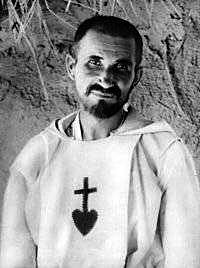 Charles Eugene, viscount of Foucauld, was born in 1858. He served as a French Army officer in Algieria beginning in 1881, and prepared a mapping of oases in Morocco in 1883. In 1886 he underwent a religious conversion, and in 1890 he joined a Trappist monastery, but soon left to become a solitary hermit in Palestine. In 1901 he went to Algeria, where he eventually settled at Tamanrasset and there lived the life of a missionary priest and prepared a Taureg dictionary. He was killed in an anti-French uprising on 1 December 1916, by those who said that his goodness tended to create friendly feelings toward the French.
In 1933 and 1939 respectively, groups of dedicated Christians were formed in Algeria known as the Little Brothers of Jesus and the Little Sisters of Jesus, inspired by his ideas and example. Members of these groups went to live in small communities, called fraternities, in areas where the people were largely poor. They supported themselves by doing the same kind of work as their neighbors. They made no explicit attempt to convert their neighbors or to debate with them. Their purpose is simply to live among them as Christians. They say that Christ did not come to earth primarily to teach (there were already teachers) but to share our human lot. They seek to express the love of Christ for the wretched of the earth by living among them and sharing their lives and their hardships. For example, on one occasion a brother became ill, and it would have been possible to send him home where he would have received European-style medical care and would almost certainly have recovered. However, this would have been an option not open to those who lived around them. Accordingly, the brother stayed in the fraternity, receiving only the treatment that a native of the area would have received, knowing that this meant that he would soon die, which he did.
by James Kiefer
Readings:
Psalm 73:24-28
24 You guide me with your counsel,
and afterwards you will receive me with honour.*
25 Whom have I in heaven but you?
And there is nothing on earth that I desire other than you.
26 My flesh and my heart may fail,
but God is the strength* of my heart and my portion for ever.
27 Indeed, those who are far from you will perish;
you put an end to those who are false to you.
28 But for me it is good to be near God;
I have made the Lord God my refuge,
to tell of all your works.
Wisdom 3:1-5
Wisdom 3:1-5
The Destiny of the Righteous
3But the souls of the righteous are in the hand of God,
and no torment will ever touch them.
2 In the eyes of the foolish they seemed to have died,
and their departure was thought to be a disaster,
3 and their going from us to be their destruction;
but they are at peace.
4 For though in the sight of others they were punished,
their hope is full of immortality.
5 Having been disciplined a little, they will receive great good,
because God tested them and found them worthy of himself;
James 1:2-4, 12
James 1:2-4,12
Faith and Wisdom
2 My brothers and sisters,* whenever you face trials of any kind, consider it nothing but joy, 3because you know that the testing of your faith produces endurance; 4and let endurance have its full effect, so that you may be mature and complete, lacking in nothing.
Trial and Temptation
12 Blessed is anyone who endures temptation. Such a one has stood the test and will receive the crown of life that the Lord* has promised to those who love him.
John 16:25-33
John 16:25-33
Peace for the Disciples
25 ‘I have said these things to you in figures of speech. The hour is coming when I will no longer speak to you in figures, but will tell you plainly of the Father. 26On that day you will ask in my name. I do not say to you that I will ask the Father on your behalf; 27for the Father himself loves you, because you have loved me and have believed that I came from God.* 28I came from the Father and have come into the world; again, I am leaving the world and am going to the Father.’
29 His disciples said, ‘Yes, now you are speaking plainly, not in any figure of speech! 30Now we know that you know all things, and do not need to have anyone question you; by this we believe that you came from God.’ 31Jesus answered them, ‘Do you now believe? 32The hour is coming, indeed it has come, when you will be scattered, each one to his home, and you will leave me alone. Yet I am not alone because the Father is with me. 33I have said this to you, so that in me you may have peace. In the world you face persecution. But take courage; I have conquered the world!’
Preface of a Saint (3)
PRAYER (traditional language)
Loving God, who didst restore the Christian faith of Charles de Foucauld through an encounter with Islam in North Africa and didst sustain him in the desert where he converted many with his witness of presence: Help us to know thee wherever we find thee, that with him, we may be faithful unto death; through Jesus Christ, who livest and reignest with thee and the Holy Spirit, one God, now and for ever. Amen.
PRAYER (contemporary language)
Loving God, who restored the Christian faith of Charles de Foucauld through an encounter with Islam in North Africa and sustained him in the desert where he converted many with his witness of presence: Help us to know you wherever we find you, that with him, we may be faithful unto death; through Jesus Christ, who lives and reigns with you and the Holy Spirit, one God, now and for ever. Amen.
This commemoration was approved provisionally at General Convention, 2009.
Return to Lectionary Home Page
Webmaster: Charles Wohlers
Last updated: 11 November. 2009
Scriptural Readings:
Morning Office Readings:
Psalm 119
The Glories of God’s Law
1 Happy are those whose way is blameless,
who walk in the law of the Lord.
2 Happy are those who keep his decrees,
who seek him with their whole heart,
3 who also do no wrong,
but walk in his ways.
4 You have commanded your precepts
to be kept diligently.
5 O that my ways may be steadfast
in keeping your statutes!
6 Then I shall not be put to shame,
having my eyes fixed on all your commandments.
7 I will praise you with an upright heart,
when I learn your righteous ordinances.
8 I will observe your statutes;
do not utterly forsake me.
9 How can young people keep their way pure?
By guarding it according to your word.
10 With my whole heart I seek you;
do not let me stray from your commandments.
11 I treasure your word in my heart,
so that I may not sin against you.
12 Blessed are you, O Lord;
teach me your statutes.
13 With my lips I declare
all the ordinances of your mouth.
14 I delight in the way of your decrees
as much as in all riches.
15 I will meditate on your precepts,
and fix my eyes on your ways.
16 I will delight in your statutes;
I will not forget your word.
17 Deal bountifully with your servant,
so that I may live and observe your word.
18 Open my eyes, so that I may behold
wondrous things out of your law.
19 I live as an alien in the land;
do not hide your commandments from me.
20 My soul is consumed with longing
for your ordinances at all times.
21 You rebuke the insolent, accursed ones,
who wander from your commandments;
22 take away from me their scorn and contempt,
for I have kept your decrees.
23 Even though princes sit plotting against me,
your servant will meditate on your statutes.
24 Your decrees are my delight,
they are my counsellors.
Isaiah 2:1-11
The Future House of God
2The word that Isaiah son of Amoz saw concerning Judah and Jerusalem.
2 In days to come
the mountain of the Lord’s house
shall be established as the highest of the mountains,
and shall be raised above the hills;
all the nations shall stream to it.
3 Many peoples shall come and say,
‘Come, let us go up to the mountain of the Lord,
to the house of the God of Jacob;
that he may teach us his ways
and that we may walk in his paths.’
For out of Zion shall go forth instruction,
and the word of the Lord from Jerusalem.
4 He shall judge between the nations,
and shall arbitrate for many peoples;
they shall beat their swords into ploughshares,
and their spears into pruning-hooks;
nation shall not lift up sword against nation,
neither shall they learn war any more.
Judgement Pronounced on Arrogance
5 O house of Jacob,
come, let us walk
in the light of the Lord!
6 For you have forsaken the ways of* your people,
O house of Jacob.
Indeed they are full of diviners* from the east
and of soothsayers like the Philistines,
and they clasp hands with foreigners.
7 Their land is filled with silver and gold,
and there is no end to their treasures;
their land is filled with horses,
and there is no end to their chariots.
8 Their land is filled with idols;
they bow down to the work of their hands,
to what their own fingers have made.
9 And so people are humbled,
and everyone is brought low—
do not forgive them!
10 Enter into the rock,
and hide in the dust
from the terror of the Lord,
and from the glory of his majesty.
11 The haughty eyes of people shall be brought low,
and the pride of everyone shall be humbled;
and the Lord alone will be exalted
on that day.
1 Thessalonians 2:13-20
13 We also constantly give thanks to God for this, that when you received the word of God that you heard from us, you accepted it not as a human word but as what it really is, God’s word, which is also at work in you believers. 14For you, brothers and sisters,* became imitators of the churches of God in Christ Jesus that are in Judea, for you suffered the same things from your own compatriots as they did from the Jews, 15who killed both the Lord Jesus and the prophets,* and drove us out; they displease God and oppose everyone 16by hindering us from speaking to the Gentiles so that they may be saved. Thus they have constantly been filling up the measure of their sins; but God’s wrath has overtaken them at last.*
Paul’s Desire to Visit the Thessalonians Again
17 As for us, brothers and sisters,* when, for a short time, we were made orphans by being separated from you—in person, not in heart—we longed with great eagerness to see you face to face. 18For we wanted to come to you—certainly I, Paul, wanted to again and again—but Satan blocked our way. 19For what is our hope or joy or crown of boasting before our Lord Jesus at his coming? Is it not you? 20Yes, you are our glory and joy!
Evening Office Readings:
Psalm 12
Plea for Help in Evil Times
To the leader: according to The Sheminith. A Psalm of David.
1 Help, O Lord, for there is no longer anyone who is godly;
the faithful have disappeared from humankind.
2 They utter lies to each other;
with flattering lips and a double heart they speak.
3 May the Lord cut off all flattering lips,
the tongue that makes great boasts,
4 those who say, ‘With our tongues we will prevail;
our lips are our own—who is our master?’
5 ‘Because the poor are despoiled, because the needy groan,
I will now rise up,’ says the Lord;
‘I will place them in the safety for which they long.’
6 The promises of the Lord are promises that are pure,
silver refined in a furnace on the ground,
purified seven times.
7 You, O Lord, will protect us;
you will guard us from this generation for ever.
8 On every side the wicked prowl,
as vileness is exalted among humankind.
Psalm 13
Prayer for Deliverance from Enemies
To the leader. A Psalm of David.
1 How long, O Lord? Will you forget me for ever?
How long will you hide your face from me?
2 How long must I bear pain* in my soul,
and have sorrow in my heart all day long?
How long shall my enemy be exalted over me?
3 Consider and answer me, O Lord my God!
Give light to my eyes, or I will sleep the sleep of death,
4 and my enemy will say, ‘I have prevailed’;
my foes will rejoice because I am shaken.
5 But I trusted in your steadfast love;
my heart shall rejoice in your salvation.
6 I will sing to the Lord,
because he has dealt bountifully with me.
Psalm 14
Denunciation of Godlessness
To the leader. Of David.
1 Fools say in their hearts, ‘There is no God.’
They are corrupt, they do abominable deeds;
there is no one who does good.
2 The Lord looks down from heaven on humankind
to see if there are any who are wise,
who seek after God.
3 They have all gone astray, they are all alike perverse;
there is no one who does good,
no, not one.
4 Have they no knowledge, all the evildoers
who eat up my people as they eat bread,
and do not call upon the Lord?
5 There they shall be in great terror,
for God is with the company of the righteous.
6 You would confound the plans of the poor,
but the Lord is their refuge.
7 O that deliverance for Israel would come from Zion!
When the Lord restores the fortunes of his people,
Jacob will rejoice; Israel will be glad.
Luke 20:19-2619When the scribes and chief priests realized that he had told this parable against them, they wanted to lay hands on him at that very hour, but they feared the people.
The Question about Paying Taxes
20 So they watched him and sent spies who pretended to be honest, in order to trap him by what he said, so as to hand him over to the jurisdiction and authority of the governor. 21So they asked him, ‘Teacher, we know that you are right in what you say and teach, and you show deference to no one, but teach the way of God in accordance with truth. 22Is it lawful for us to pay taxes to the emperor, or not?’ 23But he perceived their craftiness and said to them, 24‘Show me a denarius. Whose head and whose title does it bear?’ They said, ‘The emperor’s.’ 25He said to them, ‘Then give to the emperor the things that are the emperor’s, and to God the things that are God’s.’ 26And they were not able in the presence of the people to trap him by what he said; and being amazed by his answer, they became silent.
Eucharistic Readings:
Psalm 23
The Divine Shepherd
A Psalm of David.
1 The Lord is my shepherd, I shall not want.
2 He makes me lie down in green pastures;
he leads me beside still waters;*
3 he restores my soul.*
He leads me in right paths*
for his name’s sake.
4 Even though I walk through the darkest valley,*
I fear no evil;
for you are with me;
your rod and your staff—
they comfort me.
5 You prepare a table before me
in the presence of my enemies;
you anoint my head with oil;
my cup overflows.
6 Surely* goodness and mercy* shall follow me
all the days of my life,
and I shall dwell in the house of the Lord
my whole life long.*
Isaiah 25:6-9
6 On this mountain the Lord of hosts will make for all peoples
a feast of rich food, a feast of well-matured wines,
of rich food filled with marrow, of well-matured wines strained clear.
7 And he will destroy on this mountain
the shroud that is cast over all peoples,
the sheet that is spread over all nations;
8 he will swallow up death for ever.
Then the Lord God will wipe away the tears from all faces,
and the disgrace of his people he will take away from all the earth,
for the Lord has spoken.
9 It will be said on that day,
Lo, this is our God; we have waited for him, so that he might save us.
This is the Lord for whom we have waited;
let us be glad and rejoice in his salvation.
Matthew 15:29-39
Jesus Cures Many People
29 After Jesus had left that place, he passed along the Sea of Galilee, and he went up the mountain, where he sat down. 30Great crowds came to him, bringing with them the lame, the maimed, the blind, the mute, and many others. They put them at his feet, and he cured them, 31so that the crowd was amazed when they saw the mute speaking, the maimed whole, the lame walking, and the blind seeing. And they praised the God of Israel.
Feeding the Four Thousand
32 Then Jesus called his disciples to him and said, ‘I have compassion for the crowd, because they have been with me now for three days and have nothing to eat; and I do not want to send them away hungry, for they might faint on the way.’ 33The disciples said to him, ‘Where are we to get enough bread in the desert to feed so great a crowd?’ 34Jesus asked them, ‘How many loaves have you?’ They said, ‘Seven, and a few small fish.’ 35Then ordering the crowd to sit down on the ground, 36he took the seven loaves and the fish; and after giving thanks he broke them and gave them to the disciples, and the disciples gave them to the crowds. 37And all of them ate and were filled; and they took up the broken pieces left over, seven baskets full. 38Those who had eaten were four thousand men, besides women and children. 39After sending away the crowds, he got into the boat and went to the region of Magadan.*
Daily Readings:
Saints/Heroes/Feasts/Fasts to be observed/commemmorated/celebrated: First Week of Advent,
NICHOLAS FERRAR
DEACON, MAN OF PRAYER (1 DEC 1637)
Nicholas Ferrar, born in 1592, was the founder of a religious community that lasted from 1626 to 1646.
After Nicholas had been ordained as a deacon, he and his family and a few friends retired to Little Gidding, Huntingdonshire, England, to devote themselves to a life of prayer, fasting, and almsgiving (Matthew 6:2,5,16). They restored the abandoned church building, and became responsible for regular services there. They taught the neighborhood children, and looked after the health and well-being of the people of the district. They read the regular daily offices of the Book of Common Prayer, including the recital every day of the complete Psalter. (Day and night, there was always at least one member of the community kneeling in prayer before the altar, that they might keep the word, "Pray without ceasing.") They wrote books and stories dealing with various aspects of Christian faith and practice. They fasted with great rigor, and in other ways embraced voluntary poverty, so that they might have as much money as possible for the relief of the poor. The community was founded in 1626 (when Nicholas was 34). He died in 1637 (aged 45), and in 1646 the community was forcibly broken up by the Puritans of Cromwell's army. The memory of the community survived to inspire and influence later undertakings in Christian communal living, and one of T.S. Eliot's Four Quartets is called "Little Gidding."
by James Kiefer
[Clicking on the link above will take you to Amazon.com, where you may buy the book if you wish.]
***** ***** ***** ***** *****
From Simon Kershaw:
James supplies various details about Nicholas Ferrar's life. This is a supplement (mostly from memory, so there may be one or two lapses).
Ferrar was born in February 1593. The date is commonly given (as James did) as 1592, but this is the usual calendar confusion: England was not then using the new calendar adopted in October 1582. It was 1593 according to our modern calendar, but at the time the new year in England began on the following 25 March.
His exact date of birth is unknown, but the Community at Little Gidding observed the quatercentenary of his baptism on 27th February this year (unfortunately we couldn't get there). I quote from Seeds (the magazine of the Friends of Little Gidding and of the Society of Christ the Sower):
On 27th February, the anniversary of Nicholas's baptism, we met in our candlelit church for a communion service using the original 1549 rite---a form of worship familiar to the Ferrars. Margaret selected a variety of readings about the life of Nicholas and the first Community; and for hymns we used some of George Herbert's poetry set to 17th century music.
[Actually the statement about the 1549 rite being familiar to the Ferrars is either a misprint or a mistake: the 1559 Prayer Book of Elizabeth I would have been the BCP they knew, and the eucharist in particular is a little different between the two books.]
His family was quite wealthy, and were heavily involved in the Virginia Company, which had a Royal Charter for the plantation of the colony of Virginia. People like Sir Walter Raleigh were often visitors to the family home in London. Ferrar's niece was named Virginia, the first known use of this name. Ferrar studied at Cambridge and would perhaps have gone on to further study and the life of a don, but the damp air of the fens was bad for his health and he travelled to Europe, spending time in the warmer climate of Italy, where he would have seen the work of Philip Neri and other Oratorians.
On his return to England he found his family had fared badly. His brother John had become over-extended financially, and the Virginia Company was in danger of losing its charter. Nicholas threw himself into preserving his family from ruin. In this he was successful, and he served for a short time as a Member of Parliament, where he tried to promote the cause of the Virginia Company (which in fact did lose its charter).
At the age of 34 he gave all this up to move to found a community of prayer. In this he was supported by his mother, Mary Ferrar, and his brother John. They discovered and bought the manor of Little Gidding, a village which had been deserted since the Black Death (a major outburst of bubonic plague in the 14th century), a few miles off the Great North Road, and probably recommended by John Williams, Bishop of Lincoln whose palace was at the nearby village of Buckden. The first thing they did was to clear the tiny church which was being used as a barn and restore it for worship. Mary Ferrar and her extended family and household (about 30 people all told) moved into the manor house. Nicholas Ferrar was ordained Deacon and was the leader and spiritual director of the community.
The community attracted much attention and was visited by the king, Charles I. He was attracted by a gospel harmony they had produced, and asked to borrow it, only returning it several months later in exchange for a promise of a new harmony to give to his son, Charles, Prince of Wales. This the Ferrars did, and the superbly produced and bound manuscript book passed through the royal collection, and is now held by the British Library. Another friend of the community was George Herbert (also born in 1593 I believe) who was a deacon and held the prebend of Leighton Bromswold, 4 or 5 miles south of Little Gidding. After being ordained priest he moved elsewhere, but died shortly afterwards, leaving Nicholas Ferrar as his "literary executor".
Ferrar, who never married, died on 4th December 1637**, and was buried outside the church in Little Gidding. The leadership of the community passed to his brother John. They were visited by the king twice more. Once he came with the Prince of Wales and donated to the community some money he had won at cards off the prince the previous night. But his third visit was in secret and at night. He was fleeing from defeat (at the battle of Naseby?) and heading north to try to enlist support from the Scots. This was Cromwell country (Cromwell himself was born in Huntingdon, had lived there and in Saint Ives, and was MP for Cambridge(?), but John brought him secretly to Little Gidding, and got him away the next day.
** I don't know why he is commemorated on the wrong day in both the ECUSA and the CofE [JEK: I assume that it is because John of Damascus is commemorated on 4 December.]
The community was now in much danger. The presbyterian Puritans were now in the ascendancy, and the community was condemned in a series of scurillous pamphlets as `an Arminian Nunnery'. (Arminius was a Dutch reformer/theologian who opposed the Calvinist doctrine of predestination and election.)
In 1646, the community was forcibly broken up by Parliamentary soldiers. The brass font was thrown into the pond (from where, much damaged, it was recovered 200 years later). The village remained the property of the Ferrar family, however, and in the early 18th century another Nicholas Ferrar restored the church, shortening the nave by about 8 feet, and building the "dull facade" as Eliot calls it.
Passing out of the family, the church was further restored in the mid 19th century by William Hodgkinson, who had the armorial stained glass (4 windows with the arms of Ferrar (incorrect), Charles I, Bishop Williams & himself) inserted, and put in a rose window at the east end (this rose window was removed a couple of years ago and replaced by a Palladian-style window with plain glass). It was Hodgkinson who discovered the font and had it restored to the church. He also put in a magnificent 18th century chandelier.
In the 20th century there was a revival of interest in Ferrar & Little Gidding, typified by the romantic historical novel John Inglesant. Bp Mandell Creighton (Bishop of London at the turn of the century) wrote an article on Ferrar for the Dictionary of National Biography. The story of how T.S. Eliot came to write the poem is told in Dame Helen Gardner's book The Composition of Four Quartets [now out or print]. He probably visited Little Gidding only once, in May 1936. A friend was writing a play about the visit of Charles I to Gidding, and asked Eliot for his comments. After writing The Dry Salvages, Eliot wanted to complete what he now saw as a set of 4 poems, and he quickly settled on Little Gidding. It was written and published during the war when it was by no means certain that English culture and religion would survive. The opening stanzas, according to Dame Helen, are the only piece of narrative verse in the Four Quartets, unique amongst Eliot's poetry. The "place you would be likely to come from" is London and the blitz, or German air raids; the "route you would be likely to take" is straight up the A1 from London and then across country just as I described yesterday, and is the same whether you are Charles I ("a broken king") or not knowing what you would find (as my own first visit). The pig-sty is now part of the community guest house.
Inspired by all these things, the Friends of Little Gidding was founded after the war, with the Bishop of Ely as president and Eliot as a vice-president. In the 1970s Robert Van de Weyer, one of whose ancestors had been Herbert's patron at Leighton Bromswold, founded a trust to buy the farm house as the start of a new community and as a place of retreat. Van de Weyer was an economics lecturer at Cambridge University, and was for a time also the (non-stipendiary) priest-in-charge of Little Gidding and several parishes around. His wife, Sarah, is a leading member of the diocesan Mothers' Union and its links with the church in Sudan. The community appears to be thriving, with (at a guess) some 30 members, families, couples and singles, of several denominations (RC, Anglican, and others) with some members working outside, others within the Community. They also own the vicarage at Leighton Bromswold where some of the younger members of the community live. There is also a guest house at Little Gidding. There's also about 300 Friends, including Karen and me. By coincidence we used to live about a dozen miles from East Coker, a pretty Somerset village, featured in another of the Quartets, where Eliot's ancestors lived before emigrating to Massachusetts, and where Eliot is buried. One day perhaps we'll get to those Dry Salvages out at Cape Ann, Mass ... perhaps one of you has been there?
We find the atractions of community life never so great as when we visit Little Gidding, a truly holy place.
POSTSCRIPT (April 1994):
The community is now called the Society of Christ the Sower.
The Friends of Little Gidding has several hundred members, including Karen and me. Friends receive a regular newsletter from the Society, a prayer cycle of members and friends, and regular books put together by the society. Recently the book has become a book of devotional readings which may be used at the Daily Office. The first such (still current) is a series of readings culled from the writings of St Francis, and from various near-contemporary hagiographies.
Further details available on request. Hope this helps.
-- simon.kershaw@smallworld.co.uk
Several people have privately asked for more information about the Community of Christ the Sower and the Friends of Little Gidding. The following paragraphs are from the back of the Society's latest publication, a series of daily readings on the life of St Francis of Assisi.
THE SOCIETY OF CHRIST THE SOWER
The Society of Christ the Sower is an ecumenical religious order for married and single people. Its members follow a simple Rule of life, committing them to daily prayer, shared ministry, careful stewardship of resources, and evangelism.
The Society was founded at Little Gidding, which remains its centre. This is the site of a Christian community formed in 1626 by Nicholas Ferrar, and his beautiful chapel continues to be used for prayer each day by Society members. Before his death he said to his community: `It is the right, good old way you are in; keep in it.' These words express the aspirations of the present Society.
Church groups are invited to Little Gidding to reflect on their own common life, with the help of Society members. And each day between 11am and 5pm the `Parlour' is open to visitors. There is a small exhibition, refreshments are served and gifts made by members can be bought. Guest accommodation is available for individuals, families and small groups.
Approximately fifteen members plus their children live at Little Gidding itself. Other members live elsewhere, including Leighton Bromswold, four miles south of Little Gidding, where George Herbert, poet and friend of Nicholas Ferrar, was incumbent.
THE FRIENDS OF LITTLE GIDDING
Founded in 1947 by Alan Maycock, the Friends of Little Gidding organised for over thirty years an annual pilgrimage and raised funds for the maintenance of the church at Little Gidding. One of the original members was T.S. Eliot, whose poem entitled Little Gidding helped to renew interest in the place and its history.
Alan Maycock looked forward to community life being restored to Little Gidding. And when this occurred in the late 1970s the Friends decided to attach themselves to the Society of Christ the Sower.
Today the Friends of Little Gidding is primarily a network of prayer, and to this end a prayer calendar is sent every three months to all Friends. They also receive every six months a book in the series Daily Listening published by the Society. Many Friends also take an active interest in the life of the Society, visiting Little Gidding and corresponding with members.
The Friends of Little Gidding, Little Gidding, Huntingdon, PE17 5RJ
telephone +832 293383
***** ***** ***** ***** *****
Subject: A December pilgrimage
You drive out of Cambridge, north-west up the busy A604 dual carriageway, passing by Saint Ives. Over the A1 (the "Great North Road") onto the brand-new A14. After a few miles turn off north and drive a few hundred yards to Leighton Bromswold, where George Herbert was the incumbent. Then on, further north, down narrow country lanes, hardly wide enough for 2 cars to pass. Now you're out of the flat East Anglian fens and into the Huntingdonshire Wolds, where the land rises gently and is lightly wooded. A few more turnings, through Steeple Gidding, and on towards Great Gidding. Finally, a little signpost points down a single-lane track: "Little Gidding". Down this muddy road for a few hundred yards and you reach a small group of simple brick houses clustered around a large old farm house. A sign proclaims "The Community of Christ the Sower" in a circle around four ears of wheat arranged as a cross, and points to a small car park off to the left---it's just another muddy field. Out of the car the cold, damp misty December air hits you: you sniff, button up your coat and wish you'd worn wellingtons.
A footpath leads from the car park alongside the garden of the big house, and brings you to a small churchyard, tidily kept, with several tombs. A small church, with a weird 18th century facade, stands in the middle of the churchyard, a small door in the middle of the west front. Before the door stands an altar-tomb, a couple of feet high: this is the grave of Nicholas Ferrar. Inside the church it's dark, and still bitterly cold and damp. It's just a single aisle, say 30 feet long by 15 feet wide, with a small sanctuary beyond. There're no pews or seats, just 17th-century collegiate-style stalls around the west, north and south walls. Brightly-coloured 19th-century stained glass windows depict the coats of arms of Nicholas Ferrar (incorrectly), King Charles I, and the 19th-century restorer. A brass font with a battered crown stands like a standard candlestick at the north side of the sanctuary step. On the south side, a low doorway leads to the tiny vestry, about 8 feet square, with a disused fireplace, and an old cupboard, piled with dusty hymn and prayer books. Back out into the church again. At the west end is a small display of guide books, postcards, and copies of "Four Quartets" and other Eliot works. You turn round to the east and say a prayer. Then back out into the fast-fading December afternoon light and look around. You're standing on a hill looking south across the rolling countryside and bare ploughed fields. There is no sound except for a few birds calling overhead, and the occasional distant gunshot. It's hard to believe you're only 4 or 5 miles from the A1, one of the country's busiest roads. It's easy to believe that this was the peace and quiet which drew Nicholas Ferrar and his family from the busy world of London commerce to establish the only community in the Church of England in the 300 years between the dissolution of the monasteries, and the Oxford movement. It's easy to see what draws Christians of all denominations to this simple shrine, to remember the example of Nicholas Ferrar, and to live in a community at this place. You walk round to the farm house, in through the front door. In the hall is a small display of Ferrar and Gidding memorabilia, and you turn left into a decent-sized room labelled the Parlour. In the corner a lady looks up from her reading, smiles and welcomes you, "Would you like some tea? Cake?" "Yes, please." She disappears. Around the walls are more Ferrar pictures, and photographs of Little Gidding and members of the Community. It's lovely and warm and you undo your coat and look with dismay at your mud-spattered trousers. A notice tells you that the tables and chairs in the room were made by a member of the community and that you can buy similar furniture. Your host returns and you gratefully sit down to eat and drink, noting the books on the bookstall. Further conversation, then it's time to drive home in the dark, pledging to return someday, and pondering the advantages of community life.
The Feast of Nicholas Ferrar is celebrated on 1st December in the ECUSA calendar, and on 2nd December the English Alternative Service Book calendar. Nicholas Ferrar died on Monday 4th December 1637.
We moved to this area in November 1986 and first made this pilgrimage in December, not knowing quite what we would find when we got there. We've been back several times, usually at this time of the year, and hopefully we'll get there again before the year is out.
POSTSCRIPT (Decemeber 1994): The font has now been removed from the Church, where it was becoming damaged. It is to be displayed in the Parlour, and a new font made by local craftsmen. The small vestry has been restored as a small, heated, side chapel or oratory.
***** ***** ***** ***** *****
from Little Gidding by T.S. Eliot
If you came this way,
Taking any route, starting from anywhere,
At any time or at any season,
It would always be the same: you would have to put off
Sense and notion. You are not here to verify,
Instruct yourself, or inform curiosity
Or carry report. You are here to kneel
Where prayer has been valid. And prayer is more
Than an order of words, the conscious occupation
Of the praying mind, or the sound of the voice praying.
And what the dead had no speech for, when living,
They can tell you, being dead: the communication
Of the dead is tongued with fire
beyond the language of the living.
Here, the intersection of the timeless moment
Is England and nowhere. Never and always.
Readings:
Psalm 15
Psalm 15
Who Shall Abide in God’s Sanctuary?
A Psalm of David.
1 O Lord, who may abide in your tent?
Who may dwell on your holy hill?
2 Those who walk blamelessly, and do what is right,
and speak the truth from their heart;
3 who do not slander with their tongue,
and do no evil to their friends,
nor take up a reproach against their neighbours;
4 in whose eyes the wicked are despised,
but who honour those who fear the Lord;
who stand by their oath even to their hurt;
5 who do not lend money at interest,
and do not take a bribe against the innocent.
Those who do these things shall never be moved
Exodus 35:1-5a, 24-29
Exodus 35:1-5,24-29
Sabbath Regulations
35Moses assembled all the congregation of the Israelites and said to them: These are the things that the Lord has commanded you to do:
2 For six days shall work be done, but on the seventh day you shall have a holy sabbath of solemn rest to the Lord; whoever does any work on it shall be put to death. 3You shall kindle no fire in all your dwellings on the sabbath day.
Preparations for Making the Tabernacle
4 Moses said to all the congregation of the Israelites: This is the thing that the Lord has commanded: 5Take from among you an offering to the Lord; let whoever is of a generous heart bring the Lord’s offering: gold, silver, and bronze; 24Everyone who could make an offering of silver or bronze brought it as the Lord’s offering; and everyone who possessed acacia wood of any use in the work, brought it. 25All the skilful women spun with their hands, and brought what they had spun in blue and purple and crimson yarns and fine linen; 26all the women whose hearts moved them to use their skill spun the goats’ hair. 27And the leaders brought onyx stones and gems to be set in the ephod and the breastpiece, 28and spices and oil for the light, and for the anointing-oil, and for the fragrant incense. 29All the Israelite men and women whose hearts made them willing to bring anything for the work that the Lord had commanded by Moses to be done, brought it as a freewill-offering to the Lord.
Galatians 6:7-10
Galatians 6:7-10
7 Do not be deceived; God is not mocked, for you reap whatever you sow. 8If you sow to your own flesh, you will reap corruption from the flesh; but if you sow to the Spirit, you will reap eternal life from the Spirit. 9So let us not grow weary in doing what is right, for we will reap at harvest time, if we do not give up. 10So then, whenever we have an opportunity, let us work for the good of all, and especially for those of the family of faith.
Luke 10:38-42
Luke 10:38-42
Jesus Visits Martha and Mary
38 Now as they went on their way, he entered a certain village, where a woman named Martha welcomed him into her home. 39She had a sister named Mary, who sat at the Lord’s feet and listened to what he was saying. 40But Martha was distracted by her many tasks; so she came to him and asked, ‘Lord, do you not care that my sister has left me to do all the work by myself? Tell her then to help me.’ 41But the Lord answered her, ‘Martha, Martha, you are worried and distracted by many things; 42there is need of only one thing.* Mary has chosen the better part, which will not be taken away from her.’
Preface of a Saint (1)
PRAYER (traditional language)
Lord God, make us so reflect thy perfect love; that, with thy deacon Nicholas Ferrar and his household, we may rule ourselves according to thy Word, and serve thee with our whole heart; through Jesus Christ our Lord, who liveth and reigneth with thee and the Holy Spirit, one God, for ever and ever.
PRAYER (contemporary language)
Lord God, make us so reflect your perfect love; that, with your deacon Nicholas Ferrar and his household, we may rule ourselves according to your Word, and serve you with our whole heart; through Jesus Christ our Lord, who lives and reigns with you and the Holy Spirit, one God, for ever and ever.
Lessons revised at GC 2009.
Return to Lectionary Home Page
Webmaster: Charles Wohlers
Last updated: 17 October 2009
CHARLES DE FOUCAULD
Hermit and Servant of the Poor, 1916
Charles Eugene, viscount of Foucauld, was born in 1858. He served as a French Army officer in Algieria beginning in 1881, and prepared a mapping of oases in Morocco in 1883. In 1886 he underwent a religious conversion, and in 1890 he joined a Trappist monastery, but soon left to become a solitary hermit in Palestine. In 1901 he went to Algeria, where he eventually settled at Tamanrasset and there lived the life of a missionary priest and prepared a Taureg dictionary. He was killed in an anti-French uprising on 1 December 1916, by those who said that his goodness tended to create friendly feelings toward the French. In 1933 and 1939 respectively, groups of dedicated Christians were formed in Algeria known as the Little Brothers of Jesus and the Little Sisters of Jesus, inspired by his ideas and example. Members of these groups went to live in small communities, called fraternities, in areas where the people were largely poor. They supported themselves by doing the same kind of work as their neighbors. They made no explicit attempt to convert their neighbors or to debate with them. Their purpose is simply to live among them as Christians. They say that Christ did not come to earth primarily to teach (there were already teachers) but to share our human lot. They seek to express the love of Christ for the wretched of the earth by living among them and sharing their lives and their hardships. For example, on one occasion a brother became ill, and it would have been possible to send him home where he would have received European-style medical care and would almost certainly have recovered. However, this would have been an option not open to those who lived around them. Accordingly, the brother stayed in the fraternity, receiving only the treatment that a native of the area would have received, knowing that this meant that he would soon die, which he did.
by James Kiefer
Readings:
Psalm 73:24-28
24 You guide me with your counsel,
and afterwards you will receive me with honour.*
25 Whom have I in heaven but you?
And there is nothing on earth that I desire other than you.
26 My flesh and my heart may fail,
but God is the strength* of my heart and my portion for ever.
27 Indeed, those who are far from you will perish;
you put an end to those who are false to you.
28 But for me it is good to be near God;
I have made the Lord God my refuge,
to tell of all your works.
Wisdom 3:1-5
Wisdom 3:1-5
The Destiny of the Righteous
3But the souls of the righteous are in the hand of God,
and no torment will ever touch them.
2 In the eyes of the foolish they seemed to have died,
and their departure was thought to be a disaster,
3 and their going from us to be their destruction;
but they are at peace.
4 For though in the sight of others they were punished,
their hope is full of immortality.
5 Having been disciplined a little, they will receive great good,
because God tested them and found them worthy of himself;
James 1:2-4, 12
James 1:2-4,12
Faith and Wisdom
2 My brothers and sisters,* whenever you face trials of any kind, consider it nothing but joy, 3because you know that the testing of your faith produces endurance; 4and let endurance have its full effect, so that you may be mature and complete, lacking in nothing.
Trial and Temptation
12 Blessed is anyone who endures temptation. Such a one has stood the test and will receive the crown of life that the Lord* has promised to those who love him.
John 16:25-33
John 16:25-33
Peace for the Disciples
25 ‘I have said these things to you in figures of speech. The hour is coming when I will no longer speak to you in figures, but will tell you plainly of the Father. 26On that day you will ask in my name. I do not say to you that I will ask the Father on your behalf; 27for the Father himself loves you, because you have loved me and have believed that I came from God.* 28I came from the Father and have come into the world; again, I am leaving the world and am going to the Father.’
29 His disciples said, ‘Yes, now you are speaking plainly, not in any figure of speech! 30Now we know that you know all things, and do not need to have anyone question you; by this we believe that you came from God.’ 31Jesus answered them, ‘Do you now believe? 32The hour is coming, indeed it has come, when you will be scattered, each one to his home, and you will leave me alone. Yet I am not alone because the Father is with me. 33I have said this to you, so that in me you may have peace. In the world you face persecution. But take courage; I have conquered the world!’
Preface of a Saint (3)
PRAYER (traditional language)
Loving God, who didst restore the Christian faith of Charles de Foucauld through an encounter with Islam in North Africa and didst sustain him in the desert where he converted many with his witness of presence: Help us to know thee wherever we find thee, that with him, we may be faithful unto death; through Jesus Christ, who livest and reignest with thee and the Holy Spirit, one God, now and for ever. Amen.
PRAYER (contemporary language)
Loving God, who restored the Christian faith of Charles de Foucauld through an encounter with Islam in North Africa and sustained him in the desert where he converted many with his witness of presence: Help us to know you wherever we find you, that with him, we may be faithful unto death; through Jesus Christ, who lives and reigns with you and the Holy Spirit, one God, now and for ever. Amen.
This commemoration was approved provisionally at General Convention, 2009.
Return to Lectionary Home Page
Webmaster: Charles Wohlers
Last updated: 11 November. 2009
Scriptural Readings:
Morning Office Readings:
Psalm 119
The Glories of God’s Law
1 Happy are those whose way is blameless,
who walk in the law of the Lord.
2 Happy are those who keep his decrees,
who seek him with their whole heart,
3 who also do no wrong,
but walk in his ways.
4 You have commanded your precepts
to be kept diligently.
5 O that my ways may be steadfast
in keeping your statutes!
6 Then I shall not be put to shame,
having my eyes fixed on all your commandments.
7 I will praise you with an upright heart,
when I learn your righteous ordinances.
8 I will observe your statutes;
do not utterly forsake me.
9 How can young people keep their way pure?
By guarding it according to your word.
10 With my whole heart I seek you;
do not let me stray from your commandments.
11 I treasure your word in my heart,
so that I may not sin against you.
12 Blessed are you, O Lord;
teach me your statutes.
13 With my lips I declare
all the ordinances of your mouth.
14 I delight in the way of your decrees
as much as in all riches.
15 I will meditate on your precepts,
and fix my eyes on your ways.
16 I will delight in your statutes;
I will not forget your word.
17 Deal bountifully with your servant,
so that I may live and observe your word.
18 Open my eyes, so that I may behold
wondrous things out of your law.
19 I live as an alien in the land;
do not hide your commandments from me.
20 My soul is consumed with longing
for your ordinances at all times.
21 You rebuke the insolent, accursed ones,
who wander from your commandments;
22 take away from me their scorn and contempt,
for I have kept your decrees.
23 Even though princes sit plotting against me,
your servant will meditate on your statutes.
24 Your decrees are my delight,
they are my counsellors.
Isaiah 2:1-11
The Future House of God
2The word that Isaiah son of Amoz saw concerning Judah and Jerusalem.
2 In days to come
the mountain of the Lord’s house
shall be established as the highest of the mountains,
and shall be raised above the hills;
all the nations shall stream to it.
3 Many peoples shall come and say,
‘Come, let us go up to the mountain of the Lord,
to the house of the God of Jacob;
that he may teach us his ways
and that we may walk in his paths.’
For out of Zion shall go forth instruction,
and the word of the Lord from Jerusalem.
4 He shall judge between the nations,
and shall arbitrate for many peoples;
they shall beat their swords into ploughshares,
and their spears into pruning-hooks;
nation shall not lift up sword against nation,
neither shall they learn war any more.
Judgement Pronounced on Arrogance
5 O house of Jacob,
come, let us walk
in the light of the Lord!
6 For you have forsaken the ways of* your people,
O house of Jacob.
Indeed they are full of diviners* from the east
and of soothsayers like the Philistines,
and they clasp hands with foreigners.
7 Their land is filled with silver and gold,
and there is no end to their treasures;
their land is filled with horses,
and there is no end to their chariots.
8 Their land is filled with idols;
they bow down to the work of their hands,
to what their own fingers have made.
9 And so people are humbled,
and everyone is brought low—
do not forgive them!
10 Enter into the rock,
and hide in the dust
from the terror of the Lord,
and from the glory of his majesty.
11 The haughty eyes of people shall be brought low,
and the pride of everyone shall be humbled;
and the Lord alone will be exalted
on that day.
1 Thessalonians 2:13-20
13 We also constantly give thanks to God for this, that when you received the word of God that you heard from us, you accepted it not as a human word but as what it really is, God’s word, which is also at work in you believers. 14For you, brothers and sisters,* became imitators of the churches of God in Christ Jesus that are in Judea, for you suffered the same things from your own compatriots as they did from the Jews, 15who killed both the Lord Jesus and the prophets,* and drove us out; they displease God and oppose everyone 16by hindering us from speaking to the Gentiles so that they may be saved. Thus they have constantly been filling up the measure of their sins; but God’s wrath has overtaken them at last.*
Paul’s Desire to Visit the Thessalonians Again
17 As for us, brothers and sisters,* when, for a short time, we were made orphans by being separated from you—in person, not in heart—we longed with great eagerness to see you face to face. 18For we wanted to come to you—certainly I, Paul, wanted to again and again—but Satan blocked our way. 19For what is our hope or joy or crown of boasting before our Lord Jesus at his coming? Is it not you? 20Yes, you are our glory and joy!
Evening Office Readings:
Psalm 12
Plea for Help in Evil Times
To the leader: according to The Sheminith. A Psalm of David.
1 Help, O Lord, for there is no longer anyone who is godly;
the faithful have disappeared from humankind.
2 They utter lies to each other;
with flattering lips and a double heart they speak.
3 May the Lord cut off all flattering lips,
the tongue that makes great boasts,
4 those who say, ‘With our tongues we will prevail;
our lips are our own—who is our master?’
5 ‘Because the poor are despoiled, because the needy groan,
I will now rise up,’ says the Lord;
‘I will place them in the safety for which they long.’
6 The promises of the Lord are promises that are pure,
silver refined in a furnace on the ground,
purified seven times.
7 You, O Lord, will protect us;
you will guard us from this generation for ever.
8 On every side the wicked prowl,
as vileness is exalted among humankind.
Psalm 13
Prayer for Deliverance from Enemies
To the leader. A Psalm of David.
1 How long, O Lord? Will you forget me for ever?
How long will you hide your face from me?
2 How long must I bear pain* in my soul,
and have sorrow in my heart all day long?
How long shall my enemy be exalted over me?
3 Consider and answer me, O Lord my God!
Give light to my eyes, or I will sleep the sleep of death,
4 and my enemy will say, ‘I have prevailed’;
my foes will rejoice because I am shaken.
5 But I trusted in your steadfast love;
my heart shall rejoice in your salvation.
6 I will sing to the Lord,
because he has dealt bountifully with me.
Psalm 14
Denunciation of Godlessness
To the leader. Of David.
1 Fools say in their hearts, ‘There is no God.’
They are corrupt, they do abominable deeds;
there is no one who does good.
2 The Lord looks down from heaven on humankind
to see if there are any who are wise,
who seek after God.
3 They have all gone astray, they are all alike perverse;
there is no one who does good,
no, not one.
4 Have they no knowledge, all the evildoers
who eat up my people as they eat bread,
and do not call upon the Lord?
5 There they shall be in great terror,
for God is with the company of the righteous.
6 You would confound the plans of the poor,
but the Lord is their refuge.
7 O that deliverance for Israel would come from Zion!
When the Lord restores the fortunes of his people,
Jacob will rejoice; Israel will be glad.
Luke 20:19-2619When the scribes and chief priests realized that he had told this parable against them, they wanted to lay hands on him at that very hour, but they feared the people.
The Question about Paying Taxes
20 So they watched him and sent spies who pretended to be honest, in order to trap him by what he said, so as to hand him over to the jurisdiction and authority of the governor. 21So they asked him, ‘Teacher, we know that you are right in what you say and teach, and you show deference to no one, but teach the way of God in accordance with truth. 22Is it lawful for us to pay taxes to the emperor, or not?’ 23But he perceived their craftiness and said to them, 24‘Show me a denarius. Whose head and whose title does it bear?’ They said, ‘The emperor’s.’ 25He said to them, ‘Then give to the emperor the things that are the emperor’s, and to God the things that are God’s.’ 26And they were not able in the presence of the people to trap him by what he said; and being amazed by his answer, they became silent.
Eucharistic Readings:
Psalm 23
The Divine Shepherd
A Psalm of David.
1 The Lord is my shepherd, I shall not want.
2 He makes me lie down in green pastures;
he leads me beside still waters;*
3 he restores my soul.*
He leads me in right paths*
for his name’s sake.
4 Even though I walk through the darkest valley,*
I fear no evil;
for you are with me;
your rod and your staff—
they comfort me.
5 You prepare a table before me
in the presence of my enemies;
you anoint my head with oil;
my cup overflows.
6 Surely* goodness and mercy* shall follow me
all the days of my life,
and I shall dwell in the house of the Lord
my whole life long.*
Isaiah 25:6-9
6 On this mountain the Lord of hosts will make for all peoples
a feast of rich food, a feast of well-matured wines,
of rich food filled with marrow, of well-matured wines strained clear.
7 And he will destroy on this mountain
the shroud that is cast over all peoples,
the sheet that is spread over all nations;
8 he will swallow up death for ever.
Then the Lord God will wipe away the tears from all faces,
and the disgrace of his people he will take away from all the earth,
for the Lord has spoken.
9 It will be said on that day,
Lo, this is our God; we have waited for him, so that he might save us.
This is the Lord for whom we have waited;
let us be glad and rejoice in his salvation.
Matthew 15:29-39
Jesus Cures Many People
29 After Jesus had left that place, he passed along the Sea of Galilee, and he went up the mountain, where he sat down. 30Great crowds came to him, bringing with them the lame, the maimed, the blind, the mute, and many others. They put them at his feet, and he cured them, 31so that the crowd was amazed when they saw the mute speaking, the maimed whole, the lame walking, and the blind seeing. And they praised the God of Israel.
Feeding the Four Thousand
32 Then Jesus called his disciples to him and said, ‘I have compassion for the crowd, because they have been with me now for three days and have nothing to eat; and I do not want to send them away hungry, for they might faint on the way.’ 33The disciples said to him, ‘Where are we to get enough bread in the desert to feed so great a crowd?’ 34Jesus asked them, ‘How many loaves have you?’ They said, ‘Seven, and a few small fish.’ 35Then ordering the crowd to sit down on the ground, 36he took the seven loaves and the fish; and after giving thanks he broke them and gave them to the disciples, and the disciples gave them to the crowds. 37And all of them ate and were filled; and they took up the broken pieces left over, seven baskets full. 38Those who had eaten were four thousand men, besides women and children. 39After sending away the crowds, he got into the boat and went to the region of Magadan.*
Lutheran (ELCA And LCMS) Daily Readings For Wednesday, 1 December
From trinitycamphill.org, sanctus.org, higherthings.org and wapedia:
Daily Readings:
Saints/Heroes/Feasts/Fasts to be observed/commemmorated/celebrated: First Week of Advent
ELCA Readings:
Wednesday, December 1, 2010
Psalm 124
Psalm 124
1If it had not been the Lord who was on our side—let Israel now say—
2if it had not been the Lord who was on our side, when our enemies attacked us,
3then they would have swallowed us up alive, when their anger was kindled against us;
4then the flood would have swept us away, the torrent would have gone over us;
5then over us would have gone the raging waters.
6Blessed be the Lord, who has not given us as prey to their teeth.
7We have escaped like a bird from the snare of the fowlers; the snare is broken, and we have escaped.
8Our help is in the name of the Lord, who made heaven and earth.
Isaiah 54:1-10
Isaiah 54:1-10
54Sing, O barren one who did not bear; burst into song and shout, you who have not been in labor! For the children of the desolate woman will be more than the children of her that is married, says the Lord. 2Enlarge the site of your tent, and let the curtains of your habitations be stretched out; do not hold back; lengthen your cords and strengthen your stakes. 3For you will spread out to the right and to the left, and your descendants will possess the nations and will settle the desolate towns. 4Do not fear, for you will not be ashamed; do not be discouraged, for you will not suffer disgrace; for you will forget the shame of your youth, and the disgrace of your widowhood you will remember no more. 5For your Maker is your husband, the Lord of hosts is his name; the Holy One of Israel is your Redeemer, the God of the whole earth he is called.
6For the Lord has called you like a wife forsaken and grieved in spirit, like the wife of a man’s youth when she is cast off, says your God. 7For a brief moment I abandoned you, but with great compassion I will gather you. 8In overflowing wrath for a moment I hid my face from you, but with everlasting love I will have compassion on you, says the Lord, your Redeemer. 9This is like the days of Noah to me: Just as I swore that the waters of Noah would never again go over the earth, so I have sworn that I will not be angry with you and will not rebuke you. 10For the mountains may depart and the hills be removed, but my steadfast love shall not depart from you, and my covenant of peace shall not be removed, says the Lord, who has compassion on you.
Matthew 24:23-35
Matthew 24:23-3523Then if anyone says to you, ‘Look! Here is the Messiah!’ or ‘There he is!’ —do not believe it. 24For false messiahs and false prophets will appear and produce great signs and omens, to lead astray, if possible, even the elect. 25Take note, I have told you beforehand. 26So, if they say to you, ‘Look! He is in the wilderness,’ do not go out. If they say, ‘Look! He is in the inner rooms,’ do not believe it. 27For as the lightning comes from the east and flashes as far as the west, so will be the coming of the Son of Man. 28Wherever the corpse is, there the vultures will gather. 29“Immediately after the suffering of those days the sun will be darkened, and the moon will not give its light; the stars will fall from heaven, and the powers of heaven will be shaken. 30Then the sign of the Son of Man will appear in heaven, and then all the tribes of the earth will mourn, and they will see ‘the Son of Man coming on the clouds of heaven’ with power and great glory. 31And he will send out his angels with a loud trumpet call, and they will gather his elect from the four winds, from one end of heaven to the other.
32“From the fig tree learn its lesson: as soon as its branch becomes tender and puts forth its leaves, you know that summer is near. 33So also, when you see all these things, you know that he is near, at the very gates. 34Truly I tell you, this generation will not pass away until all these things have taken place. 35Heaven and earth will pass away, but my words will not pass away.
LCMS Readings:
December 1st, 2010
Wednesday of Ad Te Levavi (Advent 1)
Read today's Higher Things Daily Reflection
December 1, 2010 - Wednesday of the First Week of Advent
Daily Lectionary: Isaiah 7:10-8:8; 1 Peter 3:1-22
I believe in God, the Father Almighty, Maker of heaven and earth. What does this mean? I believe that God has made me and all creatures; that He has given me my body and soul, eyes, ears and all my members, my reason and all my senses and still takes care of them. He also gives me clothing and shoes, food and drink, house and home, wife and children, land, animals and all I have. He richly and daily provides me with all that I need to support this body and life... (The Creed, First Article)
In the Name + of Jesus. Amen. Perhaps you've seen the sign or billboard that says, “Don't make me come down there! - signed, God.” The implication is that we're misbehaving and if the Lord gets mad enough, He's going to come down to earth and do something about it!
But God DID come down to earth. The Father sent His Son to become flesh in the Virgin's womb so that He could grow up and die for us and take away our sins. The First Article of the Creed reminds us that God not only made us, but He's not afraid to be one of us. People often confuse God and His creation by saying that God is just a part of everything. Or else they keep God and creation so separate that God is just “out there” somewhere and doesn't really interact with the stuff He made at all. Both of those ideas is clearly wrong, according to God's Word.
The Bible teaches us that God made all things in six days and that even when His creation was ruined by sin; He didn't abandon it, but sent His Son to save and redeem it. And how? By His Son's advent in the flesh. The Son, by taking on a human nature in Christ, demonstrates that God is not afraid to touch what He has made. Rather, He takes on flesh to save creation. To save you.
And His use of His creation to save you doesn't stop there. Now the Lord who is God-made-flesh saves you by water and nourishes you by bread and wine. But, just like that flesh of Jesus, there is something else there―a washing of Word and Spirit, the Body and Blood of the Savior. The Lord is not afraid of His creation. He made it and He saves it. He made you and He saves you. In the Name of Jesus. Amen.
Savior of the nations, come, Virgin's Son, make here Your home! Marvel now, O heav'n and earth, That the Lord chose such a birth. (LSB 332:1)
Questions or comments regarding the Reflections may be sent to the Rev. Mark Buetow, Reflectons Editor, reflections@higherthings.org.
--------------------------------------------------------------------------------
Collect
Stir up Your power, O Lord, and come, that by Your protection we may be rescued from the threatening perils of our sins and saved by Your mighty deliverance; for You live and reign with the Father and the Holy Spirit, one God, now and forever. Amen.
First Reading: Is. 7:10-8:8
The Sign of Immanuel
10Again the LORD spoke to Ahaz, 11"Ask(A) a sign of the LORD your[a] God; let it be deep as Sheol or high as heaven." 12But Ahaz said, "I will not ask, and I will not put the LORD to the test." 13And he[b] said, "Hear then, O house of David! Is it too little for you to weary men, that you(B) weary my God also? 14Therefore the(C) Lord himself will give you a sign.(D) Behold, the(E) virgin shall conceive and bear a son, and shall call his name(F) Immanuel.[c] 15He shall eat(G) curds and honey when he knows how to refuse the evil and choose the good. 16(H) For before the boy knows how to refuse the evil and choose the good, the land whose two kings you dread will be(I) deserted. 17(J) The LORD will bring upon you and upon your people and upon your father’s house such days as have not come since the day that(K) Ephraim departed from Judah—the king of Assyria."
18In that day the LORD will(L) whistle for the fly that is at the end of the streams of Egypt, and for the bee that is in the land of Assyria. 19And they will all come and settle in the steep ravines, and(M) in the clefts of the rocks, and on all the thornbushes, and on all the pastures.[d]
20In that day(N) the Lord will(O) shave with a razor that is(P) hired beyond(Q) the River—with the king of Assyria—the head and the hair of the feet, and it will sweep away the beard also.
21(R) In that day a man will keep alive a young cow and two sheep, 22and because of the abundance of milk that they give, he will eat curds, for everyone who is left in the land will eat(S) curds and honey.
23In that day every place where there used to be a thousand vines, worth a thousand shekels[e] of silver, will become(T) briers and thorns. 24(U) With bow and arrows a man will come there, for all the land will be briers and thorns. 25(V) And as for all the hills that used to be hoed with a hoe, you will not come there for fear(W) of briers and thorns, but they will become a place where cattle are let loose and where sheep tread.
The Coming Assyrian Invasion
1Then the LORD said to me, "Take a large tablet(X) and write on it in common characters,[f] 'Belonging to Maher-shalal-hash-baz.'[g] 2And(Y) I will get reliable witnesses,(Z) Uriah the priest and Zechariah the son of Jeberechiah, to attest for me."
3And I went to the prophetess, and she conceived and bore a son. Then the LORD said to me,(AA) "Call his name Maher-shalal-hash-baz; 4(AB) for before the boy knows how to cry 'My father' or 'My mother,' the(AC) wealth of Damascus and the spoil of Samaria will be carried away before the king of Assyria."
5The LORD spoke to me again: 6"Because this people has refused the waters of(AD) Shiloah that flow gently, and rejoice over(AE) Rezin and the son of Remaliah, 7therefore, behold, the Lord is bringing up against them(AF) the waters of(AG) the River, mighty and many, the king of Assyria and all his glory. And it(AH) will rise over all its channels and go over all its banks, 8and it will sweep on into Judah, it will overflow and pass on,(AI) reaching even to the neck, and its(AJ) outspread wings will fill the breadth of your land,(AK) O Immanuel."
Footnotes:Isaiah 7:11 The Hebrew for you and your is singular in verses 11, 16, 17 Isaiah 7:13 That is, Isaiah Isaiah 7:14 Immanuel means God is with us Isaiah 7:19 Or watering holes, or brambles Isaiah 7:23 A shekel was about 2/5 ounce or 11 grams Isaiah 8:1 Hebrew with a man’s stylus Isaiah 8:1 Maher-shalal-hash-baz means The spoil speeds, the prey hastens
Cross references:Isaiah 7:11 : 2 Kgs 19:29 Isaiah 7:13 : Isaiah 43:24 Isaiah 7:14 : Isaiah 37:30; 38:7, 8 Isaiah 7:14 : Isaiah 9:6; Cited Matt 1:23; Luke 1:31, 34 Isaiah 7:14 : Gen 24:43 (Heb); Exodus 2:8 (Heb); Psalm 68:25 (Heb); Prov 30:19 (Heb) Isaiah 7:14 : Isaiah 8:8, 10 Isaiah 7:15 : Isaiah 7:22 Isaiah 7:16 : Isaiah 8:4 Isaiah 7:16 : Isaiah 6:12 Isaiah 7:17 : Isaiah 8:7; 2 Chr 28:20 Isaiah 7:17 : 1 Kgs 12:16 Isaiah 7:18 : Isaiah 5:26 Isaiah 7:19 : Isaiah 2:19; Jer 13:4; 16:16 Isaiah 7:20 : Isaiah 24:1; 2 Kgs 18:13-16 Isaiah 7:20 : Ezek 5:1 Isaiah 7:20 : Isaiah 10:5, 15 Isaiah 7:20 : Isaiah 8:7; 11:15 Isaiah 7:21 : Isaiah 5:17 Isaiah 7:22 : Isaiah 7:15 Isaiah 7:23 : Isaiah 5:6 Isaiah 7:24 : Judg 5:11 Isaiah 7:25 : Isaiah 32:13, 14 Isaiah 7:25 : Isaiah 7:23 Isaiah 8:1 : Isaiah 30:8 Isaiah 8:2 : Isaiah 43:10 Isaiah 8:2 : 2 Kgs 16:10, 11, 15, 16 Isaiah 8:3 : Hos 1:4 Isaiah 8:4 : Isaiah 7:16 Isaiah 8:4 : Isaiah 7:8, 9 Isaiah 8:6 : Neh 3:15; John 9:7, 11 Isaiah 8:6 : Isaiah 7:1, 4 Isaiah 8:7 : Isaiah 17:12, 13 Isaiah 8:7 : Isaiah 7:20 Isaiah 8:7 : Jer 46:8 Isaiah 8:8 : Isaiah 30:28 Isaiah 8:8 : Isaiah 36:1 Isaiah 8:8 : Isaiah 7:14
Second Reading: 1 Pt. 3:1-22
Wives and Husbands
1Likewise, wives,(A) be subject to your own husbands, so that(B) even if some do not obey the word,(C) they may be won without a word by the conduct of their wives, 2when they see your(D) respectful and pure conduct. 3(E) Do not let your adorning be external—the braiding of hair and the putting on of gold jewelry, or the clothing you wear— 4but let your adorning be(F) the hidden person of the heart with the imperishable beauty of a gentle and quiet spirit, which in God’s sight is very precious. 5For this is how the holy women who hoped in God used to adorn themselves, by submitting to their own husbands, 6as Sarah obeyed Abraham,(G) calling him lord. And you are her children, if you do good and(H) do not fear anything that is frightening.
7Likewise,(I) husbands, live with your wives in an understanding way, showing honor to the woman as the weaker(J) vessel, since they are heirs with you[a] of the grace of life, so that your prayers may not be hindered.
Suffering for Righteousness’ Sake
8Finally, all of you,(K) have unity of mind, sympathy,(L) brotherly love,(M) a tender heart, and(N) a humble mind. 9(O) Do not repay evil for evil or reviling for reviling, but on the contrary,(P) bless, for(Q) to this you were called, that you may obtain a blessing. 10For
(R) "Whoever desires to love life
and see good days,let him keep his tongue from evil
and his lips from speaking deceit; 11let him turn away from evil and do good;
let him seek peace and pursue it. 12For the eyes of the Lord are on the righteous,
and his ears are open to their prayer.But the face of the Lord is against those who do evil."
13Now(S) who is there to harm you if you are zealous for what is good? 14(T) But even if you should suffer for righteousness’ sake, you will be blessed.(U) Have no fear of them,(V) nor be troubled, 15but(W) in your hearts honor Christ the Lord as holy,(X) always being prepared to make a defense to anyone who asks you for a reason for the hope that is in you; yet do it with gentleness and(Y) respect, 16(Z) having a good conscience, so that,(AA) when you are slandered, those who revile your good behavior in Christ may be put to shame. 17For(AB) it is better to suffer for doing good, if that should be God’s will, than for doing evil.
18For Christ also(AC) suffered[b](AD) once for sins, the righteous for the unrighteous,(AE) that he might bring us to God, being put to death(AF) in the flesh but made alive(AG) in the spirit, 19in which[c] he went and(AH) proclaimed[d] to the spirits in prison, 20because[e] they formerly did not obey,(AI) when God’s patience waited in the days of Noah,(AJ) while the ark was being prepared, in which a few, that is,(AK) eight persons, were brought safely through water. 21Baptism, which corresponds to this,(AL) now saves you, not as a removal of dirt from the body but(AM) as an appeal to God for a good conscience,(AN) through the resurrection of Jesus Christ, 22who has gone into heaven and(AO) is at the right hand of God,(AP) with angels, authorities, and powers having been subjected to him.
Footnotes:1 Peter 3:7 Some manuscripts since you are joint heirs 1 Peter 3:18 Some manuscripts died 1 Peter 3:19 Or the Spirit, in whom 1 Peter 3:19 Or preached 1 Peter 3:20 Or when
Cross references:1 Peter 3:1 : Gen 3:16 1 Peter 3:1 : 1 Cor 7:16 1 Peter 3:1 : Matt 18:15; 1 Cor 9:19-22 1 Peter 3:2 : Titus 2:5 1 Peter 3:3 : 1 Tim 2:9; Isa 3:18-23 1 Peter 3:4 : Rom 2:29; Rom 7:22; 2 Cor 4:16; Eph 3:16 1 Peter 3:6 : Gen 18:12 1 Peter 3:6 : Prov 3:25 1 Peter 3:7 : Eph 5:25; Col 3:19 1 Peter 3:7 : 1 Thess 4:4 1 Peter 3:8 : Rom 12:16 1 Peter 3:8 : Heb 13:1 1 Peter 3:8 : Eph 4:32 1 Peter 3:8 : Eph 4:2 1 Peter 3:9 : 1 Peter 2:23; Rom 12:17 1 Peter 3:9 : Luke 6:28; Rom 12:14; 1 Cor 4:12 1 Peter 3:9 : 1 Peter 2:21 1 Peter 3:10 : Psalm 34:12-16 1 Peter 3:13 : Prov 16:7 1 Peter 3:14 : 1 Peter 2:19, 20; 4:14, 16; Matt 5:10 1 Peter 3:14 : Isa 8:12, 13; 1 Peter 3:6; Matt 10:28 1 Peter 3:14 : John 14:1, 27 1 Peter 3:15 : Isa 29:23; Matt 6:9 1 Peter 3:15 : Col 4:6; 2 Tim 2:25 1 Peter 3:15 : 1 Peter 1:17 1 Peter 3:16 : Heb 13:18 1 Peter 3:16 : 1 Peter 2:12 1 Peter 3:17 : 1 Peter 2:20; 1 Peter 4:15, 16 1 Peter 3:18 : 1 Peter 2:21; 4:1; Rom 4:25 1 Peter 3:18 : Heb 9:26, 28 1 Peter 3:18 : Rom 5:2 1 Peter 3:18 : 1 Peter 4:1; Col 1:22; 2 Cor 13:4 1 Peter 3:18 : 1 Peter 4:6 1 Peter 3:19 : 1 Peter 3:18 1 Peter 3:20 : Gen 6:3, 5, 13, 14 1 Peter 3:20 : Heb 11:7 1 Peter 3:20 : Gen 7:1, 7, 23; 8:18; 2 Pet 2:5 1 Peter 3:21 : Mark 16:16; Acts 16:33; Rom 6:3-6; Titus 3:5 1 Peter 3:21 : Rom 10:10 1 Peter 3:21 : 1 Peter 1:3 1 Peter 3:22 : Acts 2:33, 34; Rom 8:34; Eph 1:20; Col 3:1; Heb 1:3 1 Peter 3:22 : Rom 8:38; 1 Cor 15:24; Eph 1:21
Wednesday Father Reading
"The Jews of old had only the shadow of things; we have the truth. To the Jews a servant was sent to be their master; to us was sent the Son. The Jews ate manna; we the Christ. The Jews consumed the flesh of sheep; we the Body of Christ. The Jews received what rained down from heaven; we receive the God of heaven." [St. Salvian of Marseilles. "To the Catholic Church", Book II. 5th Century]
All Scripture Readings: English Standard Version (ESV) The Holy Bible, English Standard Version Copyright © 2001 by Crossway Bibles, a division of Good News Publishers.
Daily Readings:
Saints/Heroes/Feasts/Fasts to be observed/commemmorated/celebrated: First Week of Advent
ELCA Readings:
Wednesday, December 1, 2010
Psalm 124
Psalm 124
1If it had not been the Lord who was on our side—let Israel now say—
2if it had not been the Lord who was on our side, when our enemies attacked us,
3then they would have swallowed us up alive, when their anger was kindled against us;
4then the flood would have swept us away, the torrent would have gone over us;
5then over us would have gone the raging waters.
6Blessed be the Lord, who has not given us as prey to their teeth.
7We have escaped like a bird from the snare of the fowlers; the snare is broken, and we have escaped.
8Our help is in the name of the Lord, who made heaven and earth.
Isaiah 54:1-10
Isaiah 54:1-10
54Sing, O barren one who did not bear; burst into song and shout, you who have not been in labor! For the children of the desolate woman will be more than the children of her that is married, says the Lord. 2Enlarge the site of your tent, and let the curtains of your habitations be stretched out; do not hold back; lengthen your cords and strengthen your stakes. 3For you will spread out to the right and to the left, and your descendants will possess the nations and will settle the desolate towns. 4Do not fear, for you will not be ashamed; do not be discouraged, for you will not suffer disgrace; for you will forget the shame of your youth, and the disgrace of your widowhood you will remember no more. 5For your Maker is your husband, the Lord of hosts is his name; the Holy One of Israel is your Redeemer, the God of the whole earth he is called.
6For the Lord has called you like a wife forsaken and grieved in spirit, like the wife of a man’s youth when she is cast off, says your God. 7For a brief moment I abandoned you, but with great compassion I will gather you. 8In overflowing wrath for a moment I hid my face from you, but with everlasting love I will have compassion on you, says the Lord, your Redeemer. 9This is like the days of Noah to me: Just as I swore that the waters of Noah would never again go over the earth, so I have sworn that I will not be angry with you and will not rebuke you. 10For the mountains may depart and the hills be removed, but my steadfast love shall not depart from you, and my covenant of peace shall not be removed, says the Lord, who has compassion on you.
Matthew 24:23-35
Matthew 24:23-3523Then if anyone says to you, ‘Look! Here is the Messiah!’ or ‘There he is!’ —do not believe it. 24For false messiahs and false prophets will appear and produce great signs and omens, to lead astray, if possible, even the elect. 25Take note, I have told you beforehand. 26So, if they say to you, ‘Look! He is in the wilderness,’ do not go out. If they say, ‘Look! He is in the inner rooms,’ do not believe it. 27For as the lightning comes from the east and flashes as far as the west, so will be the coming of the Son of Man. 28Wherever the corpse is, there the vultures will gather. 29“Immediately after the suffering of those days the sun will be darkened, and the moon will not give its light; the stars will fall from heaven, and the powers of heaven will be shaken. 30Then the sign of the Son of Man will appear in heaven, and then all the tribes of the earth will mourn, and they will see ‘the Son of Man coming on the clouds of heaven’ with power and great glory. 31And he will send out his angels with a loud trumpet call, and they will gather his elect from the four winds, from one end of heaven to the other.
32“From the fig tree learn its lesson: as soon as its branch becomes tender and puts forth its leaves, you know that summer is near. 33So also, when you see all these things, you know that he is near, at the very gates. 34Truly I tell you, this generation will not pass away until all these things have taken place. 35Heaven and earth will pass away, but my words will not pass away.
LCMS Readings:
December 1st, 2010
Wednesday of Ad Te Levavi (Advent 1)
Read today's Higher Things Daily Reflection
December 1, 2010 - Wednesday of the First Week of Advent
Daily Lectionary: Isaiah 7:10-8:8; 1 Peter 3:1-22
I believe in God, the Father Almighty, Maker of heaven and earth. What does this mean? I believe that God has made me and all creatures; that He has given me my body and soul, eyes, ears and all my members, my reason and all my senses and still takes care of them. He also gives me clothing and shoes, food and drink, house and home, wife and children, land, animals and all I have. He richly and daily provides me with all that I need to support this body and life... (The Creed, First Article)
In the Name + of Jesus. Amen. Perhaps you've seen the sign or billboard that says, “Don't make me come down there! - signed, God.” The implication is that we're misbehaving and if the Lord gets mad enough, He's going to come down to earth and do something about it!
But God DID come down to earth. The Father sent His Son to become flesh in the Virgin's womb so that He could grow up and die for us and take away our sins. The First Article of the Creed reminds us that God not only made us, but He's not afraid to be one of us. People often confuse God and His creation by saying that God is just a part of everything. Or else they keep God and creation so separate that God is just “out there” somewhere and doesn't really interact with the stuff He made at all. Both of those ideas is clearly wrong, according to God's Word.
The Bible teaches us that God made all things in six days and that even when His creation was ruined by sin; He didn't abandon it, but sent His Son to save and redeem it. And how? By His Son's advent in the flesh. The Son, by taking on a human nature in Christ, demonstrates that God is not afraid to touch what He has made. Rather, He takes on flesh to save creation. To save you.
And His use of His creation to save you doesn't stop there. Now the Lord who is God-made-flesh saves you by water and nourishes you by bread and wine. But, just like that flesh of Jesus, there is something else there―a washing of Word and Spirit, the Body and Blood of the Savior. The Lord is not afraid of His creation. He made it and He saves it. He made you and He saves you. In the Name of Jesus. Amen.
Savior of the nations, come, Virgin's Son, make here Your home! Marvel now, O heav'n and earth, That the Lord chose such a birth. (LSB 332:1)
Questions or comments regarding the Reflections may be sent to the Rev. Mark Buetow, Reflectons Editor, reflections@higherthings.org.
--------------------------------------------------------------------------------
Collect
Stir up Your power, O Lord, and come, that by Your protection we may be rescued from the threatening perils of our sins and saved by Your mighty deliverance; for You live and reign with the Father and the Holy Spirit, one God, now and forever. Amen.
First Reading: Is. 7:10-8:8
The Sign of Immanuel
10Again the LORD spoke to Ahaz, 11"Ask(A) a sign of the LORD your[a] God; let it be deep as Sheol or high as heaven." 12But Ahaz said, "I will not ask, and I will not put the LORD to the test." 13And he[b] said, "Hear then, O house of David! Is it too little for you to weary men, that you(B) weary my God also? 14Therefore the(C) Lord himself will give you a sign.(D) Behold, the(E) virgin shall conceive and bear a son, and shall call his name(F) Immanuel.[c] 15He shall eat(G) curds and honey when he knows how to refuse the evil and choose the good. 16(H) For before the boy knows how to refuse the evil and choose the good, the land whose two kings you dread will be(I) deserted. 17(J) The LORD will bring upon you and upon your people and upon your father’s house such days as have not come since the day that(K) Ephraim departed from Judah—the king of Assyria."
18In that day the LORD will(L) whistle for the fly that is at the end of the streams of Egypt, and for the bee that is in the land of Assyria. 19And they will all come and settle in the steep ravines, and(M) in the clefts of the rocks, and on all the thornbushes, and on all the pastures.[d]
20In that day(N) the Lord will(O) shave with a razor that is(P) hired beyond(Q) the River—with the king of Assyria—the head and the hair of the feet, and it will sweep away the beard also.
21(R) In that day a man will keep alive a young cow and two sheep, 22and because of the abundance of milk that they give, he will eat curds, for everyone who is left in the land will eat(S) curds and honey.
23In that day every place where there used to be a thousand vines, worth a thousand shekels[e] of silver, will become(T) briers and thorns. 24(U) With bow and arrows a man will come there, for all the land will be briers and thorns. 25(V) And as for all the hills that used to be hoed with a hoe, you will not come there for fear(W) of briers and thorns, but they will become a place where cattle are let loose and where sheep tread.
The Coming Assyrian Invasion
1Then the LORD said to me, "Take a large tablet(X) and write on it in common characters,[f] 'Belonging to Maher-shalal-hash-baz.'[g] 2And(Y) I will get reliable witnesses,(Z) Uriah the priest and Zechariah the son of Jeberechiah, to attest for me."
3And I went to the prophetess, and she conceived and bore a son. Then the LORD said to me,(AA) "Call his name Maher-shalal-hash-baz; 4(AB) for before the boy knows how to cry 'My father' or 'My mother,' the(AC) wealth of Damascus and the spoil of Samaria will be carried away before the king of Assyria."
5The LORD spoke to me again: 6"Because this people has refused the waters of(AD) Shiloah that flow gently, and rejoice over(AE) Rezin and the son of Remaliah, 7therefore, behold, the Lord is bringing up against them(AF) the waters of(AG) the River, mighty and many, the king of Assyria and all his glory. And it(AH) will rise over all its channels and go over all its banks, 8and it will sweep on into Judah, it will overflow and pass on,(AI) reaching even to the neck, and its(AJ) outspread wings will fill the breadth of your land,(AK) O Immanuel."
Footnotes:Isaiah 7:11 The Hebrew for you and your is singular in verses 11, 16, 17 Isaiah 7:13 That is, Isaiah Isaiah 7:14 Immanuel means God is with us Isaiah 7:19 Or watering holes, or brambles Isaiah 7:23 A shekel was about 2/5 ounce or 11 grams Isaiah 8:1 Hebrew with a man’s stylus Isaiah 8:1 Maher-shalal-hash-baz means The spoil speeds, the prey hastens
Cross references:Isaiah 7:11 : 2 Kgs 19:29 Isaiah 7:13 : Isaiah 43:24 Isaiah 7:14 : Isaiah 37:30; 38:7, 8 Isaiah 7:14 : Isaiah 9:6; Cited Matt 1:23; Luke 1:31, 34 Isaiah 7:14 : Gen 24:43 (Heb); Exodus 2:8 (Heb); Psalm 68:25 (Heb); Prov 30:19 (Heb) Isaiah 7:14 : Isaiah 8:8, 10 Isaiah 7:15 : Isaiah 7:22 Isaiah 7:16 : Isaiah 8:4 Isaiah 7:16 : Isaiah 6:12 Isaiah 7:17 : Isaiah 8:7; 2 Chr 28:20 Isaiah 7:17 : 1 Kgs 12:16 Isaiah 7:18 : Isaiah 5:26 Isaiah 7:19 : Isaiah 2:19; Jer 13:4; 16:16 Isaiah 7:20 : Isaiah 24:1; 2 Kgs 18:13-16 Isaiah 7:20 : Ezek 5:1 Isaiah 7:20 : Isaiah 10:5, 15 Isaiah 7:20 : Isaiah 8:7; 11:15 Isaiah 7:21 : Isaiah 5:17 Isaiah 7:22 : Isaiah 7:15 Isaiah 7:23 : Isaiah 5:6 Isaiah 7:24 : Judg 5:11 Isaiah 7:25 : Isaiah 32:13, 14 Isaiah 7:25 : Isaiah 7:23 Isaiah 8:1 : Isaiah 30:8 Isaiah 8:2 : Isaiah 43:10 Isaiah 8:2 : 2 Kgs 16:10, 11, 15, 16 Isaiah 8:3 : Hos 1:4 Isaiah 8:4 : Isaiah 7:16 Isaiah 8:4 : Isaiah 7:8, 9 Isaiah 8:6 : Neh 3:15; John 9:7, 11 Isaiah 8:6 : Isaiah 7:1, 4 Isaiah 8:7 : Isaiah 17:12, 13 Isaiah 8:7 : Isaiah 7:20 Isaiah 8:7 : Jer 46:8 Isaiah 8:8 : Isaiah 30:28 Isaiah 8:8 : Isaiah 36:1 Isaiah 8:8 : Isaiah 7:14
Second Reading: 1 Pt. 3:1-22
Wives and Husbands
1Likewise, wives,(A) be subject to your own husbands, so that(B) even if some do not obey the word,(C) they may be won without a word by the conduct of their wives, 2when they see your(D) respectful and pure conduct. 3(E) Do not let your adorning be external—the braiding of hair and the putting on of gold jewelry, or the clothing you wear— 4but let your adorning be(F) the hidden person of the heart with the imperishable beauty of a gentle and quiet spirit, which in God’s sight is very precious. 5For this is how the holy women who hoped in God used to adorn themselves, by submitting to their own husbands, 6as Sarah obeyed Abraham,(G) calling him lord. And you are her children, if you do good and(H) do not fear anything that is frightening.
7Likewise,(I) husbands, live with your wives in an understanding way, showing honor to the woman as the weaker(J) vessel, since they are heirs with you[a] of the grace of life, so that your prayers may not be hindered.
Suffering for Righteousness’ Sake
8Finally, all of you,(K) have unity of mind, sympathy,(L) brotherly love,(M) a tender heart, and(N) a humble mind. 9(O) Do not repay evil for evil or reviling for reviling, but on the contrary,(P) bless, for(Q) to this you were called, that you may obtain a blessing. 10For
(R) "Whoever desires to love life
and see good days,let him keep his tongue from evil
and his lips from speaking deceit; 11let him turn away from evil and do good;
let him seek peace and pursue it. 12For the eyes of the Lord are on the righteous,
and his ears are open to their prayer.But the face of the Lord is against those who do evil."
13Now(S) who is there to harm you if you are zealous for what is good? 14(T) But even if you should suffer for righteousness’ sake, you will be blessed.(U) Have no fear of them,(V) nor be troubled, 15but(W) in your hearts honor Christ the Lord as holy,(X) always being prepared to make a defense to anyone who asks you for a reason for the hope that is in you; yet do it with gentleness and(Y) respect, 16(Z) having a good conscience, so that,(AA) when you are slandered, those who revile your good behavior in Christ may be put to shame. 17For(AB) it is better to suffer for doing good, if that should be God’s will, than for doing evil.
18For Christ also(AC) suffered[b](AD) once for sins, the righteous for the unrighteous,(AE) that he might bring us to God, being put to death(AF) in the flesh but made alive(AG) in the spirit, 19in which[c] he went and(AH) proclaimed[d] to the spirits in prison, 20because[e] they formerly did not obey,(AI) when God’s patience waited in the days of Noah,(AJ) while the ark was being prepared, in which a few, that is,(AK) eight persons, were brought safely through water. 21Baptism, which corresponds to this,(AL) now saves you, not as a removal of dirt from the body but(AM) as an appeal to God for a good conscience,(AN) through the resurrection of Jesus Christ, 22who has gone into heaven and(AO) is at the right hand of God,(AP) with angels, authorities, and powers having been subjected to him.
Footnotes:1 Peter 3:7 Some manuscripts since you are joint heirs 1 Peter 3:18 Some manuscripts died 1 Peter 3:19 Or the Spirit, in whom 1 Peter 3:19 Or preached 1 Peter 3:20 Or when
Cross references:1 Peter 3:1 : Gen 3:16 1 Peter 3:1 : 1 Cor 7:16 1 Peter 3:1 : Matt 18:15; 1 Cor 9:19-22 1 Peter 3:2 : Titus 2:5 1 Peter 3:3 : 1 Tim 2:9; Isa 3:18-23 1 Peter 3:4 : Rom 2:29; Rom 7:22; 2 Cor 4:16; Eph 3:16 1 Peter 3:6 : Gen 18:12 1 Peter 3:6 : Prov 3:25 1 Peter 3:7 : Eph 5:25; Col 3:19 1 Peter 3:7 : 1 Thess 4:4 1 Peter 3:8 : Rom 12:16 1 Peter 3:8 : Heb 13:1 1 Peter 3:8 : Eph 4:32 1 Peter 3:8 : Eph 4:2 1 Peter 3:9 : 1 Peter 2:23; Rom 12:17 1 Peter 3:9 : Luke 6:28; Rom 12:14; 1 Cor 4:12 1 Peter 3:9 : 1 Peter 2:21 1 Peter 3:10 : Psalm 34:12-16 1 Peter 3:13 : Prov 16:7 1 Peter 3:14 : 1 Peter 2:19, 20; 4:14, 16; Matt 5:10 1 Peter 3:14 : Isa 8:12, 13; 1 Peter 3:6; Matt 10:28 1 Peter 3:14 : John 14:1, 27 1 Peter 3:15 : Isa 29:23; Matt 6:9 1 Peter 3:15 : Col 4:6; 2 Tim 2:25 1 Peter 3:15 : 1 Peter 1:17 1 Peter 3:16 : Heb 13:18 1 Peter 3:16 : 1 Peter 2:12 1 Peter 3:17 : 1 Peter 2:20; 1 Peter 4:15, 16 1 Peter 3:18 : 1 Peter 2:21; 4:1; Rom 4:25 1 Peter 3:18 : Heb 9:26, 28 1 Peter 3:18 : Rom 5:2 1 Peter 3:18 : 1 Peter 4:1; Col 1:22; 2 Cor 13:4 1 Peter 3:18 : 1 Peter 4:6 1 Peter 3:19 : 1 Peter 3:18 1 Peter 3:20 : Gen 6:3, 5, 13, 14 1 Peter 3:20 : Heb 11:7 1 Peter 3:20 : Gen 7:1, 7, 23; 8:18; 2 Pet 2:5 1 Peter 3:21 : Mark 16:16; Acts 16:33; Rom 6:3-6; Titus 3:5 1 Peter 3:21 : Rom 10:10 1 Peter 3:21 : 1 Peter 1:3 1 Peter 3:22 : Acts 2:33, 34; Rom 8:34; Eph 1:20; Col 3:1; Heb 1:3 1 Peter 3:22 : Rom 8:38; 1 Cor 15:24; Eph 1:21
Wednesday Father Reading
"The Jews of old had only the shadow of things; we have the truth. To the Jews a servant was sent to be their master; to us was sent the Son. The Jews ate manna; we the Christ. The Jews consumed the flesh of sheep; we the Body of Christ. The Jews received what rained down from heaven; we receive the God of heaven." [St. Salvian of Marseilles. "To the Catholic Church", Book II. 5th Century]
All Scripture Readings: English Standard Version (ESV) The Holy Bible, English Standard Version Copyright © 2001 by Crossway Bibles, a division of Good News Publishers.
Russian Orthodox Daily Readings For Wednesday, 1 December
From oca.org:
Daily Readings:
Saints/Feasts/Fasts to be observed/commemmorated/celebrated: the Nativity Fast

Prophet Nahum
The Holy Prophet Nahum, whose name means "God consoles," was from the village of Elkosh (Galilee). He lived during the seventh century B.C. The Prophet Naum prophesies the ruin of the Assyrian city of Nineveh because of its iniquity, the destruction of the Israelite kingdom, and the blasphemy of King Sennacherib against God. The Assyrian king Ashurbanipal died in 632 B.C., and over the next two decades, his empire began to crumble. Nineveh fell in 612 B.C.
Nahum differs from most of the prophets in as much as he does not issue any call to repentance, nor does he denounce Israel for infidelity to God.
Details of the prophet's life are unknown. He died at the age of forty-five, and was buried in his native region. He is the seventh of the Twelve Minor Prophets
The Prophet Nahum and St Nahum of Ochrid (December 23) are invoked for people with mental disorders.
 Righteous Philaret the Merciful of Amnia in Asia Minor
Righteous Philaret the Merciful, son of George and Anna, was raised in piety and the fear of God. He lived during the eighth century in the village of Amneia in the Paphlagonian district of Asia Minor. His wife, Theoseba, was from a rich and illustrious family, and they had three children: a son John, and daughters Hypatia and Evanthia.
Philaret was a rich and illustrious dignitary, but he did not hoard his wealth. Knowing that many people suffered from poverty, he remembered the words of the Savior about the dread Last Judgment and about "these least ones" (Mt. 25:40); the the Apostle Paul's reminder that we will take nothing with us from this world (1 Tim 6:7); and the assertion of King David that the righteous would not be forsaken (Ps 36/37:25). Philaret, whose name means "lover of virtue," was famed for his love for the poor.
One day Ishmaelites [Arabs] attacked Paphlagonia, devastating the land and plundering the estate of Philaret. There remained only two oxen, a donkey, a cow with her calf, some beehives, and the house. But he also shared them with the poor. His wife reproached him for being heartless and unconcerned for his own family. Mildly, yet firmly he endured the reproaches of his wife and the jeers of his children. "I have hidden away riches and treasure," he told his family, "so much that it would be enough for you to feed and clothe yourselves, even if you lived a hundred years without working."
The saint's gifts always brought good to the recipient. Whoever received anything from him found that the gift would multiply, and that person would become rich. Knowing this, a certain man came to St Philaret asking for a calf so that he could start a herd. The cow missed its calf and began to bellow. Theoseba said to her husband, "You have no pity on us, you merciless man, but don't you feel sorry for the cow? You have separated her from her calf." The saint praised his wife, and agreed that it was not right to separate the cow and the calf. Therefore, he called the poor man to whom he had given the calf and told him to take the cow as well.
That year there was a famine, so St Philaret took the donkey and went to borrow six bushels of wheat from a friend of his. When he returned home, a poor man asked him for a little wheat, so he told his wife to give the man a bushel. Theoseba said, "First you must give a bushel to each of us in the family, then you can give away the rest as you choose." Philaretos then gave the man two bushels of wheat. Theoseba said sarcastically, "Give him half the load so you can share it." The saint measured out a third bushel and gave it to the man. Then Theoseba said, "Why don't you give him the bag, too, so he can carry it?" He gave him the bag. The exasperated wife said, "Just to spite me, why not give him all the wheat." St Philaret did so.
Now the man was unable to lift the six bushels of wheat, so Theoseba told her husband to give him the donkey so he could carry the wheat home. Blessing his wife, Philaret gave the donkey to the man, who went home rejoicing. Theoseba and the children wept because they were hungry.
The Lord rewarded Philaret for his generosity: when the last measure of wheat was given away, a old friend sent him forty bushels. Theoseba kept most of the wheat for herself and the children, and the saint gave away his share to the poor and had nothing left. When his wife and children were eating, he would go to them and they gave him some food. Theoseba grumbled saying, "How long are you going to keep that treasure of yours hidden? Take it out so we can buy food with it."
During this time the Byzantine empress Irene (797-802) was seeking a bride for her son, the future emperor Constantine Porphyrogenitos (780-797). Therefore, emissaries were sent throughout all the Empire to find a suitable girl, and the envoys came to Amneia.
When Philaret and Theoseba learned that these most illustrious guests were to visit their house, Philaret was very happy, but Theoseba was sad, for they did not have enough food. But Philaret told his wife to light the fire and to decorate their home. Their neighbors, knowing that imperial envoys were expected, brought everything required for a rich feast.
The envoys were impressed by the saint's daughters and granddaughters. Seeing their beauty, their deportment, their clothing, and their admirable qualities, the envoys agreed that Philaret' granddaughter, Maria was exactly what they were looking for. This Maria exceeded all her rivals in quality and modesty and indeed became Constantine's wife, and the emperor rewarded Philaret.
Thus fame and riches returned to Philaret. But just as before, this holy lover of the poor generously distributed alms and provided a feast for the poor. He and his family served them at the meal. Everyone was astonished at his humility and said: "This is a man of God, a true disciple of Christ."
He ordered a servant to take three bags and fill one with gold, one with silver, and one with copper coins. When a beggar approached, Philaret ordered his servant to bring forth one of the bags, whichever God's providence would ordain. Then he would reach into the bag and give to each person, as much as God willed.
St Philaret refused to wear fine clothes, nor would he accept any imperial rank. He said it was enough for him to be called the grandfather of the Empress. The saint reached ninety years of age and knew his end was approaching. He went to the Rodolpheia ("The Judgment") monastery in Constantinople. He gave some gold to the Abbess and asked her to allow him to be buried there, saying that he would depart this life in ten days.
He returned home and became ill. On the tenth day he summoned his family, he exhorted them to imitate his love for the poor if they desired salvation. Then he fell asleep in the Lord. He died in the year 792 and was buried in the Rodolpheia Judgment monastery in Constantinople.
The appearance of a miracle after his death confirmed the sainthood of Righteous Philaret. As they bore the body of the saint to the cemetery, a certain man, possessed by the devil, followed the funeral procession and tried to overturn the coffin. When they reached the grave, the devil threw the man down on the ground and went out of him. Many other miracles and healings also took place at the grave of the saint.
After the death of the righteous Philaret, his wife Theoseba worked at restoring monasteries and churches devastated during a barbarian invasion.
 Martyr Ananias of Persia
While Saint Ananias was being tortured for his belief in Christ, he said, "I see a ladder leading to heaven, and radiant men calling me to a marvelous city of light
Scriptural Readings:
2 Timothy 4:9-22 (Epistle)
9 Be diligent to come to me quickly;
10 for Demas has forsaken me, having loved this present world, and has departed for ThessalonIca-Crescens for Galatia, Titus for Dalmatia.
11 Only Luke is with me. Get Mark and bring him with you, for he is useful to me for ministry.
12 And Tychicus I have sent to Ephesus.
13 Bring the cloak that I left with Carpus at Troas when you come-and the books, especially the parchments.
14 Alexander the coppersmith did me much harm. May the Lord repay him according to his works.
15 You also must beware of him, for he has greatly resisted our words.
16 At my first defense no one stood with me, but all forsook me. May it not be charged against them.
17 But the Lord stood with me and strengthened me, so that the message might be preached fully through me, and that all the Gentiles might hear. Also I was delivered out of the mouth of the lion.
18 And the Lord will deliver me from every evil work and preserve me for His heavenly kingdom. To Him be glory forever and ever. Amen!
19 Greet Prisca and Aquila, and the household of Onesiphorus.
20 Erastus stayed in Corinth, but Trophimus I have left in Miletus sick.
21 Do your utmost to come before winter. Eubulus greets you, as well as Pudens, Linus, Claudia, and all the brethren.
22 The Lord Jesus Christ be with your spirit. Grace be with you. Amen
Luke 20:1-8 (Gospel)
1 Now it happened on one of those days, as He taught the people in the temple and preached the gospel, that the chief priests and the scribes, together with the elders, confronted Him
2 and spoke to Him, saying, "Tell us, by what authority are You doing these things? Or who is he who gave You this authority?"
3 But He answered and said to them, "I also will ask you one thing, and answer Me:
4 The baptism of John-was it from heaven or from men?
5 And they reasoned among themselves, saying, "If we say, 'From heaven,' He will say, 'Why then did you not believe him?'
6 But if we say, 'From men,' all the people will stone us, for they are persuaded that John was a prophet.
7 So they answered that they did not know where it was from.
8 And Jesus said to them, "Neither will I tell you by what authority I do these things."
Daily Readings:
Saints/Feasts/Fasts to be observed/commemmorated/celebrated: the Nativity Fast
Prophet Nahum
The Holy Prophet Nahum, whose name means "God consoles," was from the village of Elkosh (Galilee). He lived during the seventh century B.C. The Prophet Naum prophesies the ruin of the Assyrian city of Nineveh because of its iniquity, the destruction of the Israelite kingdom, and the blasphemy of King Sennacherib against God. The Assyrian king Ashurbanipal died in 632 B.C., and over the next two decades, his empire began to crumble. Nineveh fell in 612 B.C.
Nahum differs from most of the prophets in as much as he does not issue any call to repentance, nor does he denounce Israel for infidelity to God.
Details of the prophet's life are unknown. He died at the age of forty-five, and was buried in his native region. He is the seventh of the Twelve Minor Prophets
The Prophet Nahum and St Nahum of Ochrid (December 23) are invoked for people with mental disorders.
Righteous Philaret the Merciful of Amnia in Asia MinorRighteous Philaret the Merciful, son of George and Anna, was raised in piety and the fear of God. He lived during the eighth century in the village of Amneia in the Paphlagonian district of Asia Minor. His wife, Theoseba, was from a rich and illustrious family, and they had three children: a son John, and daughters Hypatia and Evanthia.
Philaret was a rich and illustrious dignitary, but he did not hoard his wealth. Knowing that many people suffered from poverty, he remembered the words of the Savior about the dread Last Judgment and about "these least ones" (Mt. 25:40); the the Apostle Paul's reminder that we will take nothing with us from this world (1 Tim 6:7); and the assertion of King David that the righteous would not be forsaken (Ps 36/37:25). Philaret, whose name means "lover of virtue," was famed for his love for the poor.
One day Ishmaelites [Arabs] attacked Paphlagonia, devastating the land and plundering the estate of Philaret. There remained only two oxen, a donkey, a cow with her calf, some beehives, and the house. But he also shared them with the poor. His wife reproached him for being heartless and unconcerned for his own family. Mildly, yet firmly he endured the reproaches of his wife and the jeers of his children. "I have hidden away riches and treasure," he told his family, "so much that it would be enough for you to feed and clothe yourselves, even if you lived a hundred years without working."
The saint's gifts always brought good to the recipient. Whoever received anything from him found that the gift would multiply, and that person would become rich. Knowing this, a certain man came to St Philaret asking for a calf so that he could start a herd. The cow missed its calf and began to bellow. Theoseba said to her husband, "You have no pity on us, you merciless man, but don't you feel sorry for the cow? You have separated her from her calf." The saint praised his wife, and agreed that it was not right to separate the cow and the calf. Therefore, he called the poor man to whom he had given the calf and told him to take the cow as well.
That year there was a famine, so St Philaret took the donkey and went to borrow six bushels of wheat from a friend of his. When he returned home, a poor man asked him for a little wheat, so he told his wife to give the man a bushel. Theoseba said, "First you must give a bushel to each of us in the family, then you can give away the rest as you choose." Philaretos then gave the man two bushels of wheat. Theoseba said sarcastically, "Give him half the load so you can share it." The saint measured out a third bushel and gave it to the man. Then Theoseba said, "Why don't you give him the bag, too, so he can carry it?" He gave him the bag. The exasperated wife said, "Just to spite me, why not give him all the wheat." St Philaret did so.
Now the man was unable to lift the six bushels of wheat, so Theoseba told her husband to give him the donkey so he could carry the wheat home. Blessing his wife, Philaret gave the donkey to the man, who went home rejoicing. Theoseba and the children wept because they were hungry.
The Lord rewarded Philaret for his generosity: when the last measure of wheat was given away, a old friend sent him forty bushels. Theoseba kept most of the wheat for herself and the children, and the saint gave away his share to the poor and had nothing left. When his wife and children were eating, he would go to them and they gave him some food. Theoseba grumbled saying, "How long are you going to keep that treasure of yours hidden? Take it out so we can buy food with it."
During this time the Byzantine empress Irene (797-802) was seeking a bride for her son, the future emperor Constantine Porphyrogenitos (780-797). Therefore, emissaries were sent throughout all the Empire to find a suitable girl, and the envoys came to Amneia.
When Philaret and Theoseba learned that these most illustrious guests were to visit their house, Philaret was very happy, but Theoseba was sad, for they did not have enough food. But Philaret told his wife to light the fire and to decorate their home. Their neighbors, knowing that imperial envoys were expected, brought everything required for a rich feast.
The envoys were impressed by the saint's daughters and granddaughters. Seeing their beauty, their deportment, their clothing, and their admirable qualities, the envoys agreed that Philaret' granddaughter, Maria was exactly what they were looking for. This Maria exceeded all her rivals in quality and modesty and indeed became Constantine's wife, and the emperor rewarded Philaret.
Thus fame and riches returned to Philaret. But just as before, this holy lover of the poor generously distributed alms and provided a feast for the poor. He and his family served them at the meal. Everyone was astonished at his humility and said: "This is a man of God, a true disciple of Christ."
He ordered a servant to take three bags and fill one with gold, one with silver, and one with copper coins. When a beggar approached, Philaret ordered his servant to bring forth one of the bags, whichever God's providence would ordain. Then he would reach into the bag and give to each person, as much as God willed.
St Philaret refused to wear fine clothes, nor would he accept any imperial rank. He said it was enough for him to be called the grandfather of the Empress. The saint reached ninety years of age and knew his end was approaching. He went to the Rodolpheia ("The Judgment") monastery in Constantinople. He gave some gold to the Abbess and asked her to allow him to be buried there, saying that he would depart this life in ten days.
He returned home and became ill. On the tenth day he summoned his family, he exhorted them to imitate his love for the poor if they desired salvation. Then he fell asleep in the Lord. He died in the year 792 and was buried in the Rodolpheia Judgment monastery in Constantinople.
The appearance of a miracle after his death confirmed the sainthood of Righteous Philaret. As they bore the body of the saint to the cemetery, a certain man, possessed by the devil, followed the funeral procession and tried to overturn the coffin. When they reached the grave, the devil threw the man down on the ground and went out of him. Many other miracles and healings also took place at the grave of the saint.
After the death of the righteous Philaret, his wife Theoseba worked at restoring monasteries and churches devastated during a barbarian invasion.
Martyr Ananias of Persia While Saint Ananias was being tortured for his belief in Christ, he said, "I see a ladder leading to heaven, and radiant men calling me to a marvelous city of light
Scriptural Readings:
2 Timothy 4:9-22 (Epistle)
9 Be diligent to come to me quickly;
10 for Demas has forsaken me, having loved this present world, and has departed for ThessalonIca-Crescens for Galatia, Titus for Dalmatia.
11 Only Luke is with me. Get Mark and bring him with you, for he is useful to me for ministry.
12 And Tychicus I have sent to Ephesus.
13 Bring the cloak that I left with Carpus at Troas when you come-and the books, especially the parchments.
14 Alexander the coppersmith did me much harm. May the Lord repay him according to his works.
15 You also must beware of him, for he has greatly resisted our words.
16 At my first defense no one stood with me, but all forsook me. May it not be charged against them.
17 But the Lord stood with me and strengthened me, so that the message might be preached fully through me, and that all the Gentiles might hear. Also I was delivered out of the mouth of the lion.
18 And the Lord will deliver me from every evil work and preserve me for His heavenly kingdom. To Him be glory forever and ever. Amen!
19 Greet Prisca and Aquila, and the household of Onesiphorus.
20 Erastus stayed in Corinth, but Trophimus I have left in Miletus sick.
21 Do your utmost to come before winter. Eubulus greets you, as well as Pudens, Linus, Claudia, and all the brethren.
22 The Lord Jesus Christ be with your spirit. Grace be with you. Amen
Luke 20:1-8 (Gospel)
1 Now it happened on one of those days, as He taught the people in the temple and preached the gospel, that the chief priests and the scribes, together with the elders, confronted Him
2 and spoke to Him, saying, "Tell us, by what authority are You doing these things? Or who is he who gave You this authority?"
3 But He answered and said to them, "I also will ask you one thing, and answer Me:
4 The baptism of John-was it from heaven or from men?
5 And they reasoned among themselves, saying, "If we say, 'From heaven,' He will say, 'Why then did you not believe him?'
6 But if we say, 'From men,' all the people will stone us, for they are persuaded that John was a prophet.
7 So they answered that they did not know where it was from.
8 And Jesus said to them, "Neither will I tell you by what authority I do these things."
Roman Catholic Daily Readings For Wednesday, 1 December
From USCCB, CNA and Catholic Online:
Daily Readings:
Saints/Feasts/Fasts to be observed/commemmorated/celebrated: The Fast of the Nativity
The commemoration of Saint Nahum, the prophet, who preached God as the one who directs the course of history and judges the peoples with justice
St. Eligius
Feastday: December 1
Patron of metalworkers
Eligius (also known as Eloi) was born around 590 near Limoges in France. He became an extremely skillful metalsmith and was appointed master of the mint under King Clotaire II of Paris. Eligius developed a close friendship with the King and his reputation as an outstanding metalsmith became widespread. With his fame came fortune. Eligius was very generous to the poor, ransomed many slaves, and built several churches and a monastery at Solignac. He also erected a major convent in Paris with property he received from Clotaire's son, King Dagobert I. In 629, Eligius was appointed Dagobert's first counselor. Later, on a mission for Dagobert, he persuaded the Breton King Judicael, to accept the authority of Dagobert. Eligius later fulfilled his desire to serve God as a priest, after being ordained in 640. Then he was made bishop of Noyon and Tournai. His apostolic zeal led him to preach in Flanders, especially Antwerp, Ghent, and Courtai where he made many converts. Eligius died on December 1, around 660, at Noyon. He is the patron of metalworkers and his feast day is December 1. The use of one's talents and wealth for the welfare of humanity is a very true reflection of the image of God. In the case of St. Eligius, he was so well liked that he attracted many to Christ. His example should encourage us to be generous in spirit and kind and happy in demeanor.
More Saints of the Day
•St. Edmund Campion
•St. Agericus
•Bl. Alexander Briant
•St. Ananias
•St. Ansanus
•St. Ursicinus
•St. Candres
•St. Castritian
•St. Constantian
•St. Diodorus & Marianus
•St. Evasius
•St. Grwst
•Bl. John Beche
•St. Leontius
•St. Lucius
•Bl. Richard Langley
•St. Natalia
•St. Olympiades
Scriptural Readings:
December 1, 2010
Wednesday of the First Week of Advent
Reading 1
Is 25:6-10a
On this mountain the LORD of hosts
will provide for all peoples
A feast of rich food and choice wines,
juicy, rich food and pure, choice wines.
On this mountain he will destroy
the veil that veils all peoples,
The web that is woven over all nations;
he will destroy death forever.
The Lord GOD will wipe away
the tears from all faces;
The reproach of his people he will remove
from the whole earth; for the Lord has spoken.
On that day it will be said:
“Behold our God, to whom we looked to save us!
This is the LORD for whom we looked;
let us rejoice and be glad that he has saved us!”
For the hand of the LORD will rest on this mountain.
Ps 23:1-3a, 3b-4, 5, 6Responsorial PsalmR. (6cd) I shall live in the house of the Lord all the days of my life.
The LORD is my shepherd; I shall not want.
In verdant pastures he gives me repose;
Beside restful waters he leads me;
he refreshes my soul.
R. I shall live in the house of the Lord all the days of my life.
He guides me in right paths
for his name’s sake.
Even though I walk in the dark valley
I fear no evil; for you are at my side
With your rod and your staff
that give me courage.
R. I shall live in the house of the Lord all the days of my life.
You spread the table before me
in the sight of my foes;
You anoint my head with oil;
my cup overflows.
R. I shall live in the house of the Lord all the days of my life.
Only goodness and kindness follow me
all the days of my life;
And I shall dwell in the house of the LORD
for years to come.
R. I shall live in the house of the Lord all the days of my life.
Mt 15:29-37GospelAt that time:
Jesus walked by the Sea of Galilee,
went up on the mountain, and sat down there.
Great crowds came to him,
having with them the lame, the blind, the deformed, the mute,
and many others.
They placed them at his feet, and he cured them.
The crowds were amazed when they saw the mute speaking,
the deformed made whole,
the lame walking,
and the blind able to see,
and they glorified the God of Israel.
Jesus summoned his disciples and said,
“My heart is moved with pity for the crowd,
for they have been with me now for three days
and have nothing to eat.
I do not want to send them away hungry,
for fear they may collapse on the way.”
The disciples said to him,
“Where could we ever get enough bread in this deserted place
to satisfy such a crowd?”
Jesus said to them, “How many loaves do you have?”
“Seven,” they replied, “and a few fish.”
He ordered the crowd to sit down on the ground.
Then he took the seven loaves and the fish,
gave thanks, broke the loaves,
and gave them to the disciples, who in turn gave them to the crowds.
They all ate and were satisfied.
They picked up the fragments left over–seven baskets full.
Next Day
Lectionary for Mass for Use in the Dioceses of the United States, second typical edition, Copyright © 2001, 1998, 1997, 1986, 1970 Confraternity of Christian Doctrine; Psalm refrain © 1968, 1981, 1997, International Committee on English in the Liturgy, Inc. All rights reserved. Neither this work nor any part of it may be reproduced, distributed, performed or displayed in any medium, including electronic or digital, without permission in writing from the copyright owner.
Daily Readings:
Saints/Feasts/Fasts to be observed/commemmorated/celebrated: The Fast of the Nativity
The commemoration of Saint Nahum, the prophet, who preached God as the one who directs the course of history and judges the peoples with justice
St. Eligius
Feastday: December 1
Patron of metalworkers
Eligius (also known as Eloi) was born around 590 near Limoges in France. He became an extremely skillful metalsmith and was appointed master of the mint under King Clotaire II of Paris. Eligius developed a close friendship with the King and his reputation as an outstanding metalsmith became widespread. With his fame came fortune. Eligius was very generous to the poor, ransomed many slaves, and built several churches and a monastery at Solignac. He also erected a major convent in Paris with property he received from Clotaire's son, King Dagobert I. In 629, Eligius was appointed Dagobert's first counselor. Later, on a mission for Dagobert, he persuaded the Breton King Judicael, to accept the authority of Dagobert. Eligius later fulfilled his desire to serve God as a priest, after being ordained in 640. Then he was made bishop of Noyon and Tournai. His apostolic zeal led him to preach in Flanders, especially Antwerp, Ghent, and Courtai where he made many converts. Eligius died on December 1, around 660, at Noyon. He is the patron of metalworkers and his feast day is December 1. The use of one's talents and wealth for the welfare of humanity is a very true reflection of the image of God. In the case of St. Eligius, he was so well liked that he attracted many to Christ. His example should encourage us to be generous in spirit and kind and happy in demeanor.
More Saints of the Day
•St. Edmund Campion
•St. Agericus
•Bl. Alexander Briant
•St. Ananias
•St. Ansanus
•St. Ursicinus
•St. Candres
•St. Castritian
•St. Constantian
•St. Diodorus & Marianus
•St. Evasius
•St. Grwst
•Bl. John Beche
•St. Leontius
•St. Lucius
•Bl. Richard Langley
•St. Natalia
•St. Olympiades
Scriptural Readings:
December 1, 2010
Wednesday of the First Week of Advent
Reading 1
Is 25:6-10a
On this mountain the LORD of hosts
will provide for all peoples
A feast of rich food and choice wines,
juicy, rich food and pure, choice wines.
On this mountain he will destroy
the veil that veils all peoples,
The web that is woven over all nations;
he will destroy death forever.
The Lord GOD will wipe away
the tears from all faces;
The reproach of his people he will remove
from the whole earth; for the Lord has spoken.
On that day it will be said:
“Behold our God, to whom we looked to save us!
This is the LORD for whom we looked;
let us rejoice and be glad that he has saved us!”
For the hand of the LORD will rest on this mountain.
Ps 23:1-3a, 3b-4, 5, 6Responsorial PsalmR. (6cd) I shall live in the house of the Lord all the days of my life.
The LORD is my shepherd; I shall not want.
In verdant pastures he gives me repose;
Beside restful waters he leads me;
he refreshes my soul.
R. I shall live in the house of the Lord all the days of my life.
He guides me in right paths
for his name’s sake.
Even though I walk in the dark valley
I fear no evil; for you are at my side
With your rod and your staff
that give me courage.
R. I shall live in the house of the Lord all the days of my life.
You spread the table before me
in the sight of my foes;
You anoint my head with oil;
my cup overflows.
R. I shall live in the house of the Lord all the days of my life.
Only goodness and kindness follow me
all the days of my life;
And I shall dwell in the house of the LORD
for years to come.
R. I shall live in the house of the Lord all the days of my life.
Mt 15:29-37GospelAt that time:
Jesus walked by the Sea of Galilee,
went up on the mountain, and sat down there.
Great crowds came to him,
having with them the lame, the blind, the deformed, the mute,
and many others.
They placed them at his feet, and he cured them.
The crowds were amazed when they saw the mute speaking,
the deformed made whole,
the lame walking,
and the blind able to see,
and they glorified the God of Israel.
Jesus summoned his disciples and said,
“My heart is moved with pity for the crowd,
for they have been with me now for three days
and have nothing to eat.
I do not want to send them away hungry,
for fear they may collapse on the way.”
The disciples said to him,
“Where could we ever get enough bread in this deserted place
to satisfy such a crowd?”
Jesus said to them, “How many loaves do you have?”
“Seven,” they replied, “and a few fish.”
He ordered the crowd to sit down on the ground.
Then he took the seven loaves and the fish,
gave thanks, broke the loaves,
and gave them to the disciples, who in turn gave them to the crowds.
They all ate and were satisfied.
They picked up the fragments left over–seven baskets full.
Next Day
Lectionary for Mass for Use in the Dioceses of the United States, second typical edition, Copyright © 2001, 1998, 1997, 1986, 1970 Confraternity of Christian Doctrine; Psalm refrain © 1968, 1981, 1997, International Committee on English in the Liturgy, Inc. All rights reserved. Neither this work nor any part of it may be reproduced, distributed, performed or displayed in any medium, including electronic or digital, without permission in writing from the copyright owner.
Subscribe to:
Posts (Atom)